- Published on
Clinical Procedures - Assisting a Patient to Change Position in Bed (Glide Sheet)
Equipment
• Single-patient use, multi-directional slide sheet/glide sheet:
• May be heavy-duty plastic or fabric
• Half size: fits under average-sized patient from shoulder to knee
• Full size: head to toe
• Minimum of 2 staff.
Procedure
• Ensure patient is aware of the procedure, understands, and has given consent, if able
• Patient should be lying flat in bed
• D Check patient is suitably clothed/covered
• Discuss desired end position of patient with the other handlers)
• Move the bed to waist height to prevent staff injuries:
• Staff should not have to overstretch to complete the manoeuvre
• Ensure the brakes on bed are secure
• Staff should stand either side of the bed facing each other
• Staff should ensure they are wearing appropriate low-heeled, properly fitting footwear, and that laces are not trailing
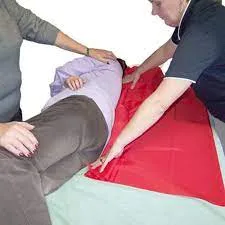
• To place glide sheet under patient, roll patient on bed sheet over to one side of the bed. Either:
• 1 staff member leans over patient and pulls the bottom sheet to roll patient onto one side
• If possible, encourage the patient to roll themselves onto one side.
• The handler nearest the patient should hold sheet (and patient on their side) whilst the glide sheet is inserted by the other handler
• Place the glide sheet between mattress and bottom sheet
• The second handler should hold the glide sheet and push as far as possible under bottom sheet and the patient rolls back onto their back
• Repeat manoeuvre from the other side until glide sheet is fully under the patient
• Once the sheet is in place, agree which handler will give command to move patient
• Both handlers should grip the bed sheet, with both hands, as close to patient as possible
• Place both feet firmly on the floor
• On command of 'Ready, Steady, Move', both handlers grip bottom sheet and gently move patient to previously agreed position
• Place pillows appropriately for the patient's revised position
• Reverse patient movement procedure (onto his/her side)
to remove glide sheet.
Procedures Tips
• Do not rush. Ensure sufficient time is available to explain the manoeuvre to the patient and safely complete the manoeuvre
• Ensure the patient is informed regarding the manoeuvre
• Check bed area for any furniture/equipment that could be moved to allow more space to complete the manoeuvre
• Always check that IV fluids, catheters, drains, and other devices are safe and not likely to be pulled out during procedure
• Check with qualified staff any changes in the patient's condition prior to the manoeuvre
• Check with staff whether the patient has any history of cognitive problems, violence, or aggression or has any health problems which may prevent or impact upon the manoeuvre
• If appropriate, ensure bed rails are put back into place following procedure to prevent patient falling from bed
Replace glide/slide sheet next to patient's bed-head, checking it is labelled for the named patient only
• Consult physiotherapists and/or ward staff if unsure of any of the above.
Documentation
• All patients should have assessments carried out within 24 hours of admission and placed in their file
• Any issues or concerns should be documented in the patient's notes to ensure other ward staff are aware of problems.
Equipment
• Single-patient use, multi-directional slide sheet/glide sheet:
• May be heavy-duty plastic or fabric
• Half size: fits under average-sized patient from shoulder to knee
• Full size: head to toe
• Minimum of 2 staff.
Procedure
• Ensure patient is aware of the procedure, understands, and has given consent, if able
• Patient should be lying flat in bed
• D Check patient is suitably clothed/covered
• Discuss desired end position of patient with the other handlers)
• Move the bed to waist height to prevent staff injuries:
• Staff should not have to overstretch to complete the manoeuvre
• Ensure the brakes on bed are secure
• Staff should stand either side of the bed facing each other
• Staff should ensure they are wearing appropriate low-heeled, properly fitting footwear, and that laces are not trailing
• To place glide sheet under patient, roll patient on bed sheet over to one side of the bed. Either:
• 1 staff member leans over patient and pulls the bottom sheet to roll patient onto one side
• If possible, encourage the patient to roll themselves onto one side.
• The handler nearest the patient should hold sheet (and patient on their side) whilst the glide sheet is inserted by the other handler
• Place the glide sheet between mattress and bottom sheet
• The second handler should hold the glide sheet and push as far as possible under bottom sheet and the patient rolls back onto their back
• Repeat manoeuvre from the other side until glide sheet is fully under the patient
• Once the sheet is in place, agree which handler will give command to move patient
• Both handlers should grip the bed sheet, with both hands, as close to patient as possible
• Place both feet firmly on the floor
• On command of 'Ready, Steady, Move', both handlers grip bottom sheet and gently move patient to previously agreed position
• Place pillows appropriately for the patient's revised position
• Reverse patient movement procedure (onto his/her side)
to remove glide sheet.
Procedures Tips
• Do not rush. Ensure sufficient time is available to explain the manoeuvre to the patient and safely complete the manoeuvre
• Ensure the patient is informed regarding the manoeuvre
• Check bed area for any furniture/equipment that could be moved to allow more space to complete the manoeuvre
• Always check that IV fluids, catheters, drains, and other devices are safe and not likely to be pulled out during procedure
• Check with qualified staff any changes in the patient's condition prior to the manoeuvre
• Check with staff whether the patient has any history of cognitive problems, violence, or aggression or has any health problems which may prevent or impact upon the manoeuvre
• If appropriate, ensure bed rails are put back into place following procedure to prevent patient falling from bed
Replace glide/slide sheet next to patient's bed-head, checking it is labelled for the named patient only
• Consult physiotherapists and/or ward staff if unsure of any of the above.
Documentation
• All patients should have assessments carried out within 24 hours of admission and placed in their file
• Any issues or concerns should be documented in the patient's notes to ensure other ward staff are aware of problems.
0 Comments
