- Published on
Clinical Procedures - Bronchoscopy
Indications
• Diagnostic: histology/cytology in suspected lung malignancy, sample mediastinal lymphadenopathy, alveolar lavage (e.g. TB), transbronchial biopsy (e.g. diffuse lung disease)
• Therapeutic: placement of guidewire for local radiotherapy, direct treatment (e.g. diathermy to strictures):
• Placement of endobronchial stents and the removal of foreign bodies are usually accomplished at rigid bronchoscopy under general anaesthetic.
Contraindications
• Absolute: cardiovascular instability, life-threatening arrhythmia, severe hypoxaemia, respiratory failure with hypercapnia (unless intubated/
ventilated):
•Rigid bronchoscopy contraindications: unstable neck, severely ankylosed cervical spine, severely restricted temporomandibular joints
• Relative: uncooperative patient, recent MI, tracheal obstruction, un-correctable coagulopathy:
• Transbronchial biopsy with caution in uraemia, SVCO, pulmonary hypertension (risk of bleeding).
Procedure
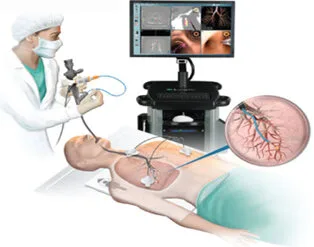
Bronchoscopy is an endoscopic examination of the bronchial tree.
• Patient sits on the couch, leaning back comfortably
• Sedation (e.g. midazolam) may be given with monitoring of oxygen saturation. Atropine may also be given to decrease secretions
• Pharynx is anesthetized with aerosolized lidocaine
• Lubricated bronchoscope (about 6mm wide and 60cm long) is passed nasally or orally with use of a bite-block
• Brushings, biopsy or lavage (50-100mL saline) may be performed
• Duration varies but averages at about 20-30 minutes.
Risks
• Bleeding from a biopsy site and transient fever (10-15%)
• Medication effects: respiratory depression, hypotension, arrhythmias
• Topical anaesthesia: laryngospasm, bronchospasm, seizures, arrhythmias
• Minor laryngeal edema or injury with hoarseness, hypoxaemia in patients with compromised gas exchange (1-10%
• Mortality is 1 to 4/10,000 patients
• Transbronchial biopsy: pneumothorax (2-5%), significant haemorrhage (1%); death (12 in 10,000).
Patient Preparation
• Anticoagulant and antiplatelet therapy: stop for 3 days. Clopidogrel should be stopped for 5 days
• Blood tests: check clotting and full blood count
• Spirometry: perform if underlying lung disease
• Fasting: nil by mouth 2 hours before the procedure, no solids
4-6 hours before procedure.
Post-procedure
• Oxygen: supplemental oxygen for up to 1 hour
• Eating/drinking: drink after 1 hour. If no problems, can eat
• Chest radiography: only if dyspnoea or chest pain following biopsy
(10% risk of pneumothorax)
• Driving: if had midazolam or similar, not to drive or operate heavy machinery for the rest of the day.
Indications
• Diagnostic: histology/cytology in suspected lung malignancy, sample mediastinal lymphadenopathy, alveolar lavage (e.g. TB), transbronchial biopsy (e.g. diffuse lung disease)
• Therapeutic: placement of guidewire for local radiotherapy, direct treatment (e.g. diathermy to strictures):
• Placement of endobronchial stents and the removal of foreign bodies are usually accomplished at rigid bronchoscopy under general anaesthetic.
Contraindications
• Absolute: cardiovascular instability, life-threatening arrhythmia, severe hypoxaemia, respiratory failure with hypercapnia (unless intubated/
ventilated):
•Rigid bronchoscopy contraindications: unstable neck, severely ankylosed cervical spine, severely restricted temporomandibular joints
• Relative: uncooperative patient, recent MI, tracheal obstruction, un-correctable coagulopathy:
• Transbronchial biopsy with caution in uraemia, SVCO, pulmonary hypertension (risk of bleeding).
Procedure
Bronchoscopy is an endoscopic examination of the bronchial tree.
• Patient sits on the couch, leaning back comfortably
• Sedation (e.g. midazolam) may be given with monitoring of oxygen saturation. Atropine may also be given to decrease secretions
• Pharynx is anesthetized with aerosolized lidocaine
• Lubricated bronchoscope (about 6mm wide and 60cm long) is passed nasally or orally with use of a bite-block
• Brushings, biopsy or lavage (50-100mL saline) may be performed
• Duration varies but averages at about 20-30 minutes.
Risks
• Bleeding from a biopsy site and transient fever (10-15%)
• Medication effects: respiratory depression, hypotension, arrhythmias
• Topical anaesthesia: laryngospasm, bronchospasm, seizures, arrhythmias
• Minor laryngeal edema or injury with hoarseness, hypoxaemia in patients with compromised gas exchange (1-10%
• Mortality is 1 to 4/10,000 patients
• Transbronchial biopsy: pneumothorax (2-5%), significant haemorrhage (1%); death (12 in 10,000).
Patient Preparation
• Anticoagulant and antiplatelet therapy: stop for 3 days. Clopidogrel should be stopped for 5 days
• Blood tests: check clotting and full blood count
• Spirometry: perform if underlying lung disease
• Fasting: nil by mouth 2 hours before the procedure, no solids
4-6 hours before procedure.
Post-procedure
• Oxygen: supplemental oxygen for up to 1 hour
• Eating/drinking: drink after 1 hour. If no problems, can eat
• Chest radiography: only if dyspnoea or chest pain following biopsy
(10% risk of pneumothorax)
• Driving: if had midazolam or similar, not to drive or operate heavy machinery for the rest of the day.
0 Comments
