- Published on
Clinical Procedures – Laryngeal Mask Airway
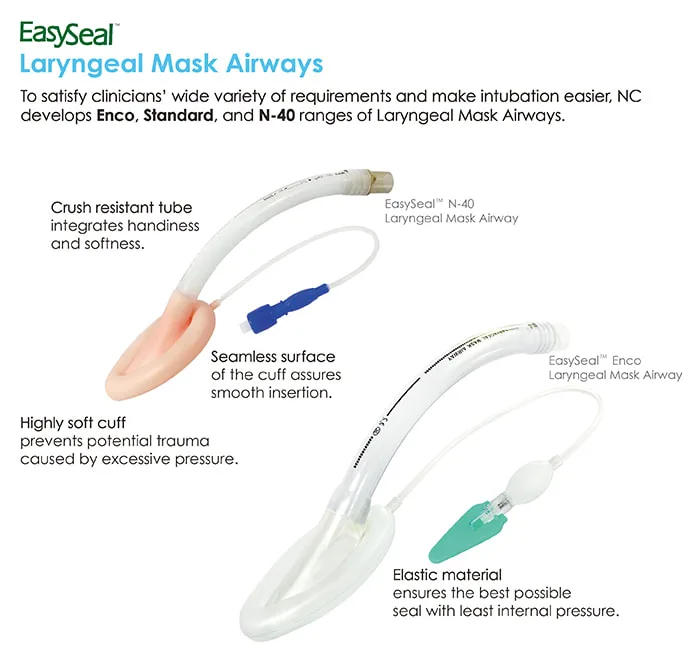
A laryngeal mask airway (LMA) is a tube with an inflatable cuff ('mask) around its base to create a seal around the laryngeal inlet.
• This does not prevent aspiration of stomach contents.
Indications
• Unconscious patient requiring ventilation.
Contraindications
• Conscious patient (absolute)
• Maxillofacial trauma
• Risk of aspiration
• >16 weeks pregnant.
Procedure
• Ensure that the cuff inflates and deflates satisfactorily
• For insertion, the mask should be completely deflated
• Deflate the cuff with a 20mL syringe. Lubricate the outer cuff with aqueous gel
• Gently extend the head and flex the neck (except in possible cervical trauma)
• Hold the LMA tubing near the cuff, like a pen
• With the mask facing down, pass along the under-surface of the palate until it reaches the posterior pharynx
• Guide the tube backwards and downwards (using a finger if necessary) until resistance is felt
• Remove your hand and fill the mask with the required amount of air (usually 20-30mL):
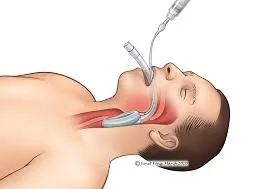
• The tube should lift out of the mouth slightly and the larynx is pushed forward if it is in the correct position
• Connect the bag-valve mask and ventilate
• Auscultate in both axillary regions to confirm ventilation
• Insert a bite block/Guedel airway next to the tube in case the patient bites down
• Secure in place with tape/ribbon.
A laryngeal mask airway (LMA) is a tube with an inflatable cuff ('mask) around its base to create a seal around the laryngeal inlet.
• This does not prevent aspiration of stomach contents.
Indications
• Unconscious patient requiring ventilation.
Contraindications
• Conscious patient (absolute)
• Maxillofacial trauma
• Risk of aspiration
• >16 weeks pregnant.
Procedure
• Ensure that the cuff inflates and deflates satisfactorily
• For insertion, the mask should be completely deflated
• Deflate the cuff with a 20mL syringe. Lubricate the outer cuff with aqueous gel
• Gently extend the head and flex the neck (except in possible cervical trauma)
• Hold the LMA tubing near the cuff, like a pen
• With the mask facing down, pass along the under-surface of the palate until it reaches the posterior pharynx
• Guide the tube backwards and downwards (using a finger if necessary) until resistance is felt
• Remove your hand and fill the mask with the required amount of air (usually 20-30mL):
• The tube should lift out of the mouth slightly and the larynx is pushed forward if it is in the correct position
• Connect the bag-valve mask and ventilate
• Auscultate in both axillary regions to confirm ventilation
• Insert a bite block/Guedel airway next to the tube in case the patient bites down
• Secure in place with tape/ribbon.
0 Comments
