- Published on
Clinical Procedures - Nasopharyngeal airway
A flexible tube is inserted through the nostril into the pharynx and is better tolerated than the oropharyngeal airway in semi-conscious patients.
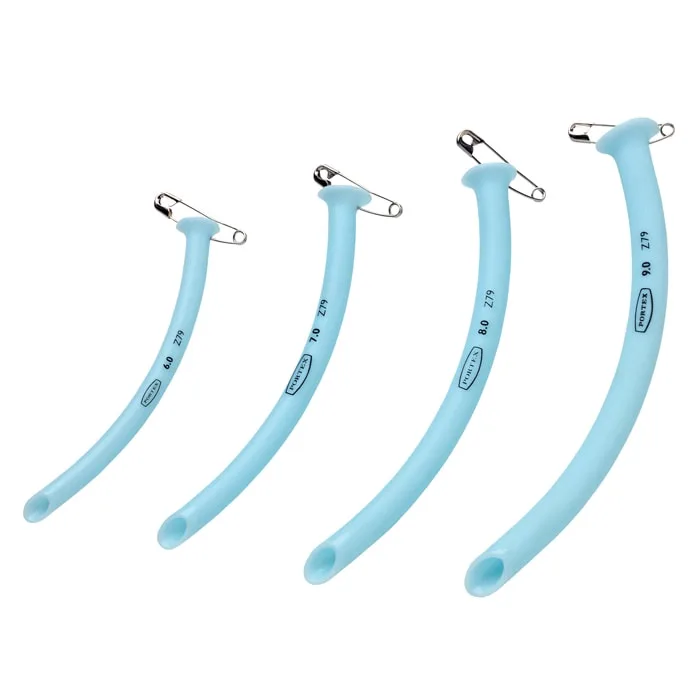
Although there is a small flange at the end of the airway, a safety pin is usually inserted to prevent the device migrating into the patient's nose.
Indications
• Patients with reduced conscious level and/or airway compromise who will not tolerate an oropharyngeal airway (intact gag reflex).
Contraindications
• Known basal skull fracture (relative contraindication).
Procedure
• Lubricate the device
• Insert bevelled end into the wider nostril, passing it posteriorly and medially, aiming for the back of the opposite eyeball
• Use size 10 or 12 catheter for suction if required
• Advance until the flange is flush against the nostril.
Procedure Tips
• If insertion proves difficult, try the opposite nostril.
Airway sizes
• Nasopharyngeal airways come in several sizes; the size is usually stamped on the side
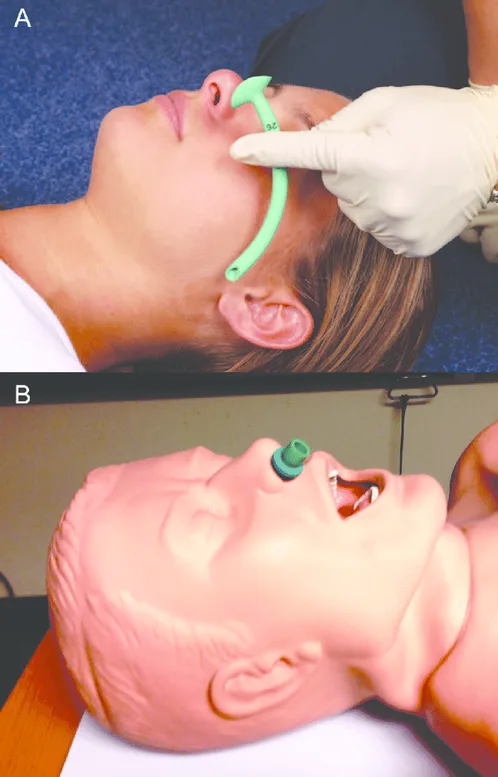
• Select the correct size for your patient by measuring the airway against the side of their face. The flange should lie at the patient's nostril and the tip at the tragus of the ear.
A flexible tube is inserted through the nostril into the pharynx and is better tolerated than the oropharyngeal airway in semi-conscious patients.
Although there is a small flange at the end of the airway, a safety pin is usually inserted to prevent the device migrating into the patient's nose.
Indications
• Patients with reduced conscious level and/or airway compromise who will not tolerate an oropharyngeal airway (intact gag reflex).
Contraindications
• Known basal skull fracture (relative contraindication).
Procedure
• Lubricate the device
• Insert bevelled end into the wider nostril, passing it posteriorly and medially, aiming for the back of the opposite eyeball
• Use size 10 or 12 catheter for suction if required
• Advance until the flange is flush against the nostril.
Procedure Tips
• If insertion proves difficult, try the opposite nostril.
Airway sizes
• Nasopharyngeal airways come in several sizes; the size is usually stamped on the side
• Select the correct size for your patient by measuring the airway against the side of their face. The flange should lie at the patient's nostril and the tip at the tragus of the ear.
0 Comments
