- Published on
Clinical Procedures - Oropharyngeal (Guedel) airway
A stiff tube with a fixed curvature is inserted through the mouth. A flange limits the depth of insertion.
• Use when the patient is semi-conscious.
Indications
• Airway compromise in the patient with reduced conscious level.
Contraindications
• Active gag reflex. Conscious patient.
Procedure
• Insert the airway initially with the curvature upwards
• Once inside the mouth, rotate it 180°
• Continue to insert, following the curvature of the tongue until the flange rests against the teeth or gums
• Ensure there is no gagging, snoring or vomiting and that air can move in and out freely.
Procedure Tips
• May be used for suction (size 10, 12, or 14 catheters).
• Insertion can be guided with a tongue depressor.
Airway Sizes
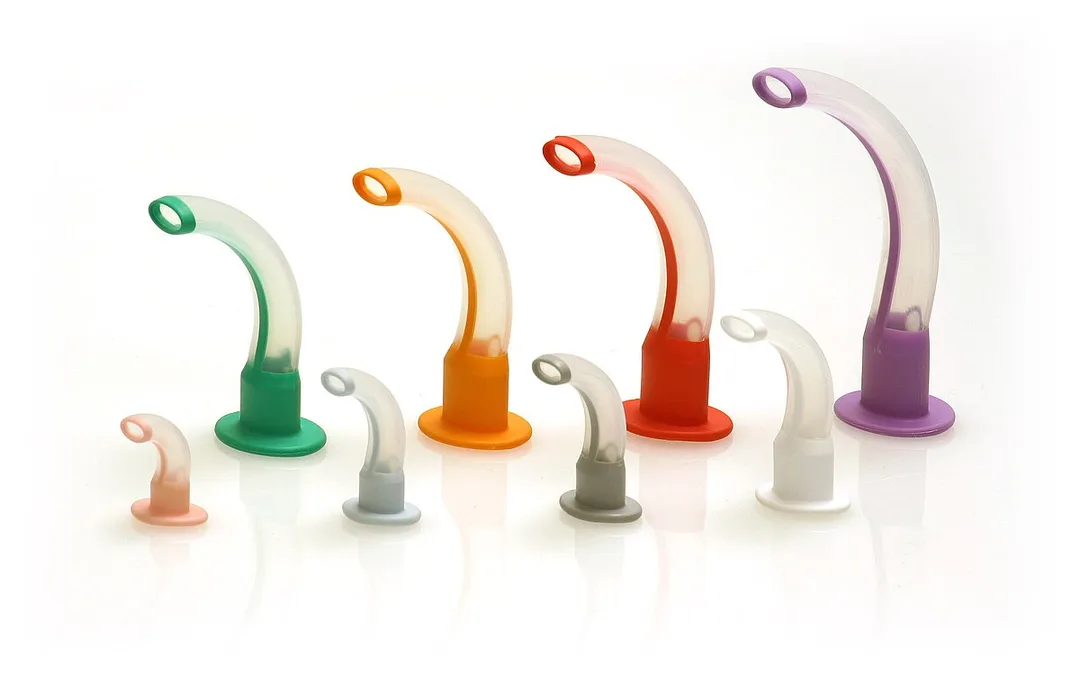
• Oropharyngeal airways come in many sizes and are colour-coded for convenience
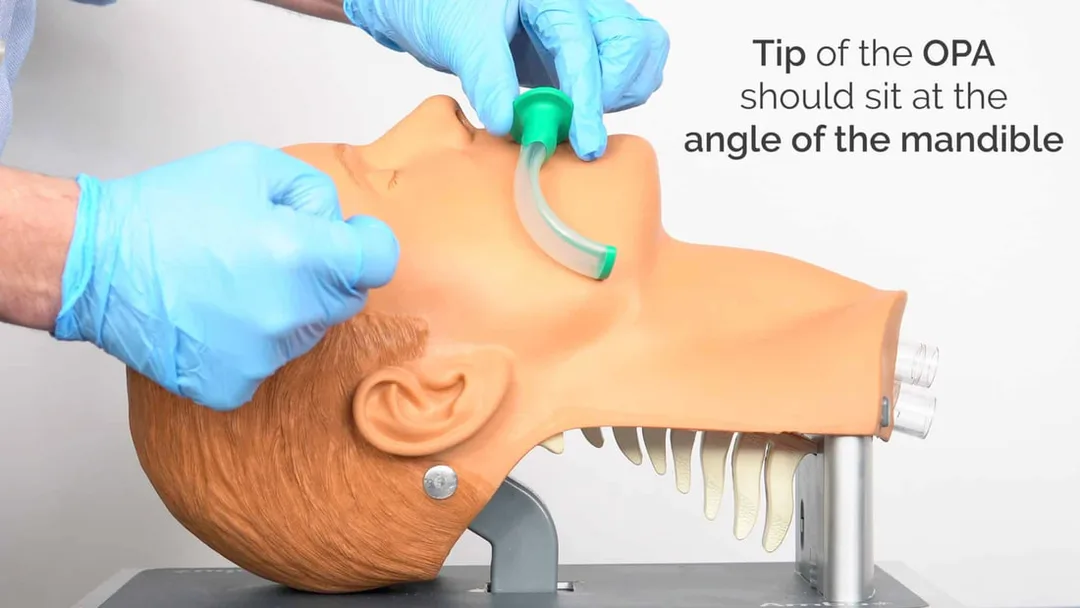
• Select the correct size of airway for the patient by measuring it against the side of the patients face. The flange should sit at the corner of the patient's mouth and the tip at the angle of the jaw.
A stiff tube with a fixed curvature is inserted through the mouth. A flange limits the depth of insertion.
• Use when the patient is semi-conscious.
Indications
• Airway compromise in the patient with reduced conscious level.
Contraindications
• Active gag reflex. Conscious patient.
Procedure
• Insert the airway initially with the curvature upwards
• Once inside the mouth, rotate it 180°
• Continue to insert, following the curvature of the tongue until the flange rests against the teeth or gums
• Ensure there is no gagging, snoring or vomiting and that air can move in and out freely.
Procedure Tips
• May be used for suction (size 10, 12, or 14 catheters).
• Insertion can be guided with a tongue depressor.
Airway Sizes
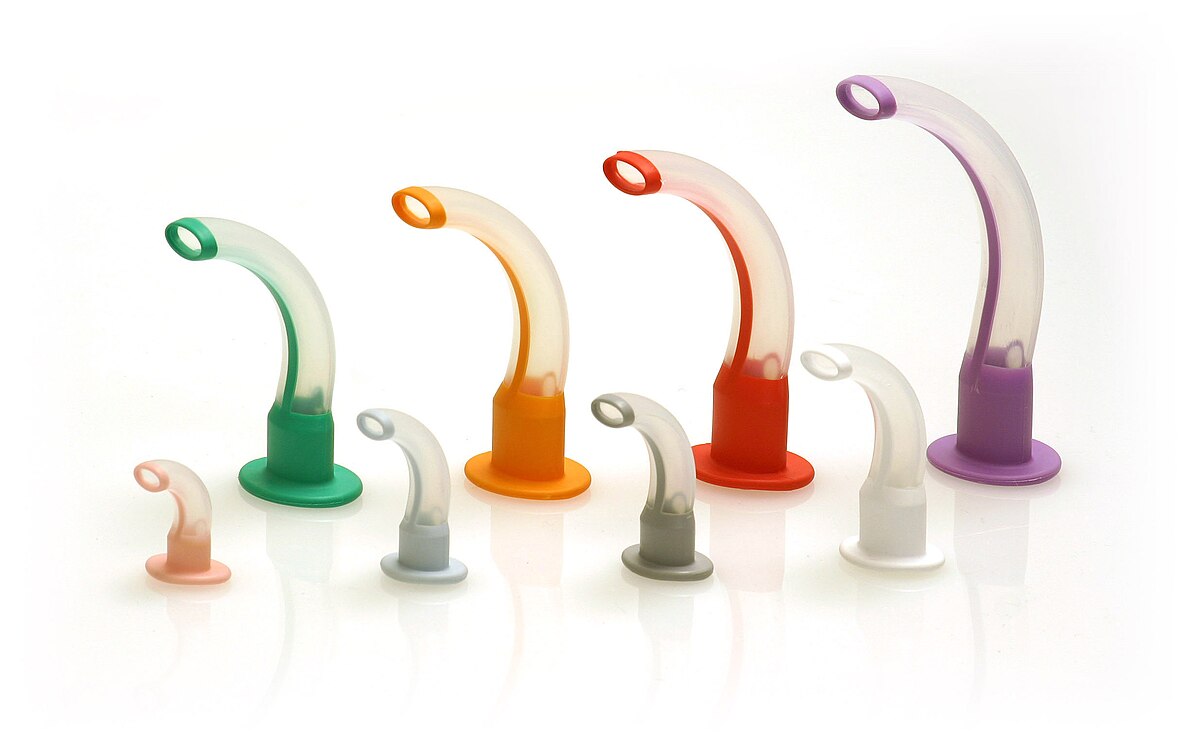
• Oropharyngeal airways come in many sizes and are colour-coded for convenience
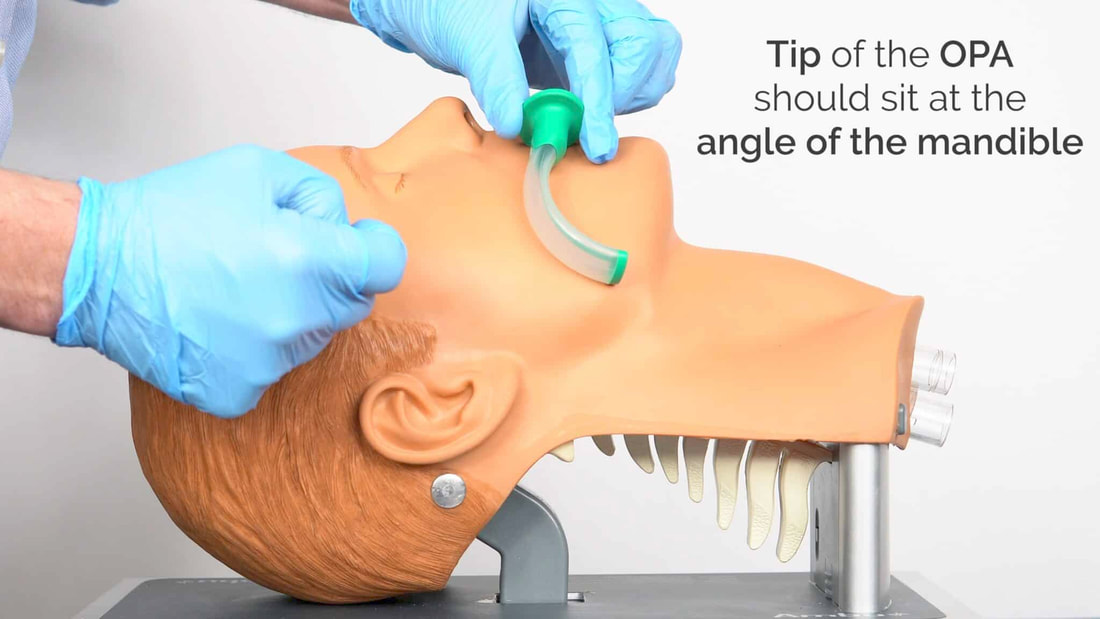
• Select the correct size of airway for the patient by measuring it against the side of the patients face. The flange should sit at the corner of the patient's mouth and the tip at the angle of the jaw.
0 Comments
