- Published on
Clinical Procedures –Suprapubic Catheterization
Indications
• Failed urethral catheterization in acute urinary retention
• Long-term catheterization (performed electively).
Contraindications
• Pregnancy
• Peritonism
• Clot retention (caused by underlying bladder malignancy)
• Previous lower abdominal surgery (bowel may stick to abdominal wall).
Risks
• Intra-abdominal injury (bowel perforation at insertion), peritonitis, infection, hemorrhage.
Procedure Tips
• D Bladder MUST be palpable and urine MUST be aspirated in order to safely insert catheter:
• Examine the patient. If the bladder is not palpable, consider other causes for the patient's symptoms
• Wear a disposable apron to avoid an unexpected shower
• Catheter balloon should be inflated with sterile water, not saline:
• Precipitation of saline can damage balloon and lead to difficult deflation and removal
• If unable to safely perform at bedside, abandon procedure
• Additional use of ultrasound is encouraged to facilitate safe catheter placement
• The first catheter change should be at 6 weeks to allow fistulous tract formation and thereafter 3-monthly changes.
Documentation
• Date, time, indication, informed consent obtained
• Volume and type of local anesthesia infiltrated
• Aspiration of urine?
• Size and type of catheter
• Urine drained freely once catheter placed?
• Amount of sterile water used to inflate the balloon
• Type of dressing used to anchor catheter
• Residual volume of urine drained
• Signature, printed name, and contact details.
Equipment
• lodine solution
• Catheter pack (containing sterile drape, sterile gauze, sterile receptacles)
• 2 x sterile gloves
• 21G (green) needle
• 2 x 10 mL syringe
• 10mL 1% lidocaine
• 10mL sterile water
• Scalpel
• Suprapubic catheter trocar
• 16Ch long-term Foley catheter (Silastic®)
• Catheter bag
• Adhesive dressing
• • Assistant.
Procedure
• Suprapubic catheterization has a mortality rate of
0.8-1.8%. It should only be performed by a suitably experienced individual, ideally a Urologist.
• Introduce yourself, confirm the patient's identity, explain the procedure, and obtain informed consent
• Place trolley on right-hand side of patient and position the patient supine with abdomen exposed
• Wash hands thoroughly
• Ask assistant to open catheter pack onto trolley
• Ask assistant to open first pair of sterile gloves. Put them
on
• Ask assistant to pour iodine into catheter pack receptacle
• Clean suprapubic area with gauze soaked in iodine, starting at site of incision (central and approximately 2-3 finger breadths above pubic symphysis) and working outwards
• Remove gloves and change for second sterile pair
• Attach green needle to 10mL syringe and draw up lidocaine
• Infiltrate skin at incision site and deeper layers of abdominal wall with 10mL of 1% lidocaine:
• Aspirate before each injection. If blood is aspirated, stop, change position of needle and recheck
• Using same needle and syringe attempt to aspirate urine
• If unsuccessful, alter angulation or even position of needle until urine is aspirated
• Use needle puncture site as marker for incision
• Ask assistant to open scalpel, trocar, catheter, and silk suture onto catheter pack
• D Test efficacy of anaesthesia using needle. If anaesthesia is not sufficient, wait a few minutes and recheck. If still not sufficient, infiltrate more anesthetic and repeat process
• Perform a 1cm vertical incision at needle site through skin, subcutaneous fat, and muscle layer
• Hold the trocar in the palm of the right hand (like a corkscrew), with middle finger outstretched for support and to limit depth of entry:
• Left hand is used to steady needle end of trocar
• Insert trocar through incision, in same direction as needle, using twisting motion:
• " You should feel a first 'give through linea alba and a second 'give on entering the bladder
• When urine issues from trocar, remove trocar holding attached sheath in place
• Block the end with right thumb to stop urine leakage
• Insert catheter via sheath
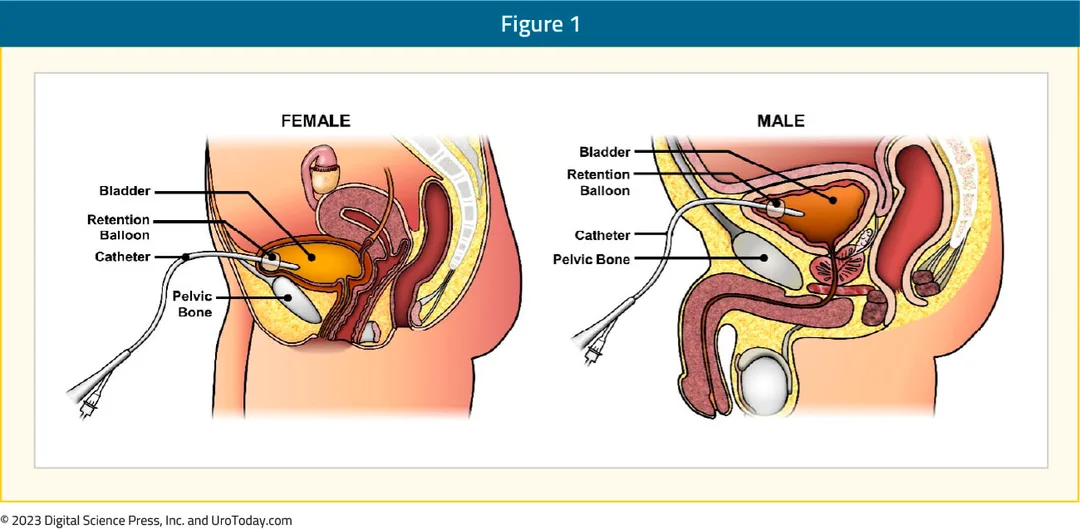
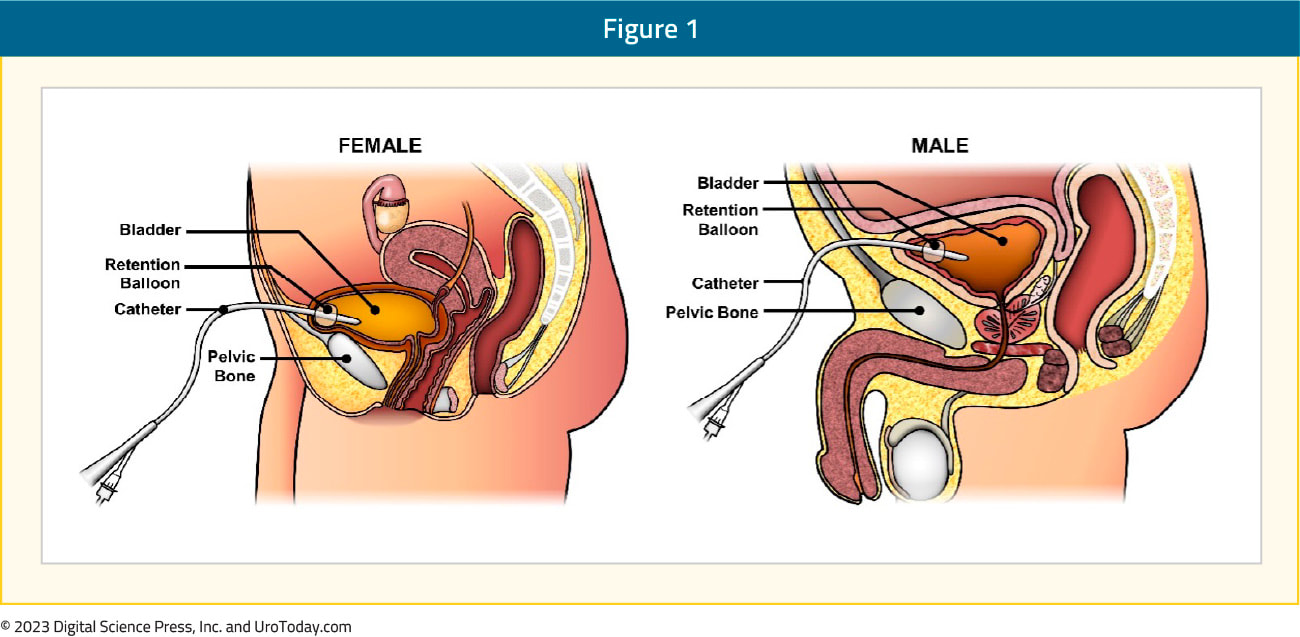
• Insert catheter as far as possible and inflate balloon
• Remove sheath by splitting apart
• Attach catheter bag
• Gently pull the catheter back until resistance is felt
• Secure catheter in place with suitable dressing
• Dress catheter site with gauze and adhesive dressing.
Indications
• Failed urethral catheterization in acute urinary retention
• Long-term catheterization (performed electively).
Contraindications
• Pregnancy
• Peritonism
• Clot retention (caused by underlying bladder malignancy)
• Previous lower abdominal surgery (bowel may stick to abdominal wall).
Risks
• Intra-abdominal injury (bowel perforation at insertion), peritonitis, infection, hemorrhage.
Procedure Tips
• D Bladder MUST be palpable and urine MUST be aspirated in order to safely insert catheter:
• Examine the patient. If the bladder is not palpable, consider other causes for the patient's symptoms
• Wear a disposable apron to avoid an unexpected shower
• Catheter balloon should be inflated with sterile water, not saline:
• Precipitation of saline can damage balloon and lead to difficult deflation and removal
• If unable to safely perform at bedside, abandon procedure
• Additional use of ultrasound is encouraged to facilitate safe catheter placement
• The first catheter change should be at 6 weeks to allow fistulous tract formation and thereafter 3-monthly changes.
Documentation
• Date, time, indication, informed consent obtained
• Volume and type of local anesthesia infiltrated
• Aspiration of urine?
• Size and type of catheter
• Urine drained freely once catheter placed?
• Amount of sterile water used to inflate the balloon
• Type of dressing used to anchor catheter
• Residual volume of urine drained
• Signature, printed name, and contact details.
Equipment
• lodine solution
• Catheter pack (containing sterile drape, sterile gauze, sterile receptacles)
• 2 x sterile gloves
• 21G (green) needle
• 2 x 10 mL syringe
• 10mL 1% lidocaine
• 10mL sterile water
• Scalpel
• Suprapubic catheter trocar
• 16Ch long-term Foley catheter (Silastic®)
• Catheter bag
• Adhesive dressing
• • Assistant.
Procedure
• Suprapubic catheterization has a mortality rate of
0.8-1.8%. It should only be performed by a suitably experienced individual, ideally a Urologist.
• Introduce yourself, confirm the patient's identity, explain the procedure, and obtain informed consent
• Place trolley on right-hand side of patient and position the patient supine with abdomen exposed
• Wash hands thoroughly
• Ask assistant to open catheter pack onto trolley
• Ask assistant to open first pair of sterile gloves. Put them
on
• Ask assistant to pour iodine into catheter pack receptacle
• Clean suprapubic area with gauze soaked in iodine, starting at site of incision (central and approximately 2-3 finger breadths above pubic symphysis) and working outwards
• Remove gloves and change for second sterile pair
• Attach green needle to 10mL syringe and draw up lidocaine
• Infiltrate skin at incision site and deeper layers of abdominal wall with 10mL of 1% lidocaine:
• Aspirate before each injection. If blood is aspirated, stop, change position of needle and recheck
• Using same needle and syringe attempt to aspirate urine
• If unsuccessful, alter angulation or even position of needle until urine is aspirated
• Use needle puncture site as marker for incision
• Ask assistant to open scalpel, trocar, catheter, and silk suture onto catheter pack
• D Test efficacy of anaesthesia using needle. If anaesthesia is not sufficient, wait a few minutes and recheck. If still not sufficient, infiltrate more anesthetic and repeat process
• Perform a 1cm vertical incision at needle site through skin, subcutaneous fat, and muscle layer
• Hold the trocar in the palm of the right hand (like a corkscrew), with middle finger outstretched for support and to limit depth of entry:
• Left hand is used to steady needle end of trocar
• Insert trocar through incision, in same direction as needle, using twisting motion:
• " You should feel a first 'give through linea alba and a second 'give on entering the bladder
• When urine issues from trocar, remove trocar holding attached sheath in place
• Block the end with right thumb to stop urine leakage
• Insert catheter via sheath
• Insert catheter as far as possible and inflate balloon
• Remove sheath by splitting apart
• Attach catheter bag
• Gently pull the catheter back until resistance is felt
• Secure catheter in place with suitable dressing
• Dress catheter site with gauze and adhesive dressing.
0 Comments
