- Published on
Clinical Procedures - Transferring a Patient Using a Hoist
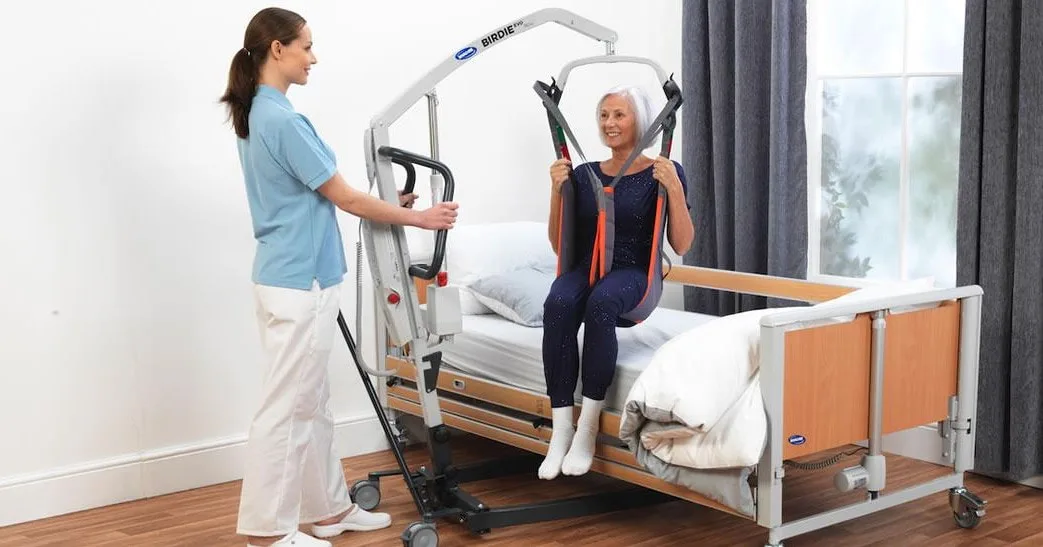
Limited input from patient. Use this technique to transfer patients who are unable to weight bear, sit up in the bed, or use a bedpan.
Equipment
• Hoist
• Sling: single-patient use (disposable).
Procedure
• D There should be at least 2 handlers. Agree who will give commands:
• Check care plan regarding patient's suitability for hoist usage
• Before getting equipment, ensure manoeuvre is explained to patient
• Select appropriate sling: small, medium, or large
• Ensure hoist and sling are compatible
• Check hoist is able to take patient's weight: most are able to take up to 25 stones (170kg)
• Ensure issues around patient's privacy and dignity are appropriately addressed
• Check bed is at waist height to prevent staff injuries
• Staff stand either side of bed facing each other
• © Check brakes on bed secure
• Patient should be rolled to one side of bed:
•Encourage patient to do so without staff assistance if capable
• Lay the hoist sling on the bed
• Roll the patient to other side of the bed:
• Sling should now be in a position from patient's head to thigh
• Place the loops at shoulder end of sling on arm of hoist
• Pass the thigh-end loops through each other, then place on arm of hoist:
• D Ensure the loops are correctly positioned before moving
. 1 handler should now manage the controls of the hoist.
• Second handler lowers patient's bed, then moves behind the patient/hoist, ready to guide them into the chair
• Move patient back with hoist
• Second handler gently guides patient into the chair whilst they are
lowered
• Once patient is in chair, disconnect loops from hoist
• Remove sling from beneath lower legs of patient.
Procedures Tips
• Ensure sufficient time available to safely complete the manoeuvre
• Check bed area for any furniture/equipment that could be moved (e.g.
trailing wires)
• Always check items such as IV fluids, catheters, and drains are safe and unlikely to be caught in hoist or pulled out during procedure
• Check with qualified staff/physiotherapists regarding any changes in the patient's condition prior to manoeuvre. Transfer may be inadvisable
• Staff should wear suitable (preferably low-heel) footwear and non-restrictive clothing
• Hoist should only be used to transfer patients short distances (bed-side manoeuvres only)
• Ensure hoist is fully charged before commencing manoeuvre
• Ensure the brakes of the hoist are off. This will allow the hoist to find its own centre of gravity.
Risks
• Potential injuries to patient or staff arising from trailing leads, drains, etc.
• Disconnection of equipment during manoeuvre:
• Watch out for IV pumps, syringe drivers, catheters.
Documentation
• All patients should have assessments carried out within 24 hours of admission
• Care plan should be maintained/consulted as appropriate
• If there are any issues with equipment or manoeuvre, advise nurse in charge, document in notes, and complete an appropriate incident form
Limited input from patient. Use this technique to transfer patients who are unable to weight bear, sit up in the bed, or use a bedpan.
Equipment
• Hoist
• Sling: single-patient use (disposable).
Procedure
• D There should be at least 2 handlers. Agree who will give commands:
• Check care plan regarding patient's suitability for hoist usage
• Before getting equipment, ensure manoeuvre is explained to patient
• Select appropriate sling: small, medium, or large
• Ensure hoist and sling are compatible
• Check hoist is able to take patient's weight: most are able to take up to 25 stones (170kg)
• Ensure issues around patient's privacy and dignity are appropriately addressed
• Check bed is at waist height to prevent staff injuries
• Staff stand either side of bed facing each other
• © Check brakes on bed secure
• Patient should be rolled to one side of bed:
•Encourage patient to do so without staff assistance if capable
• Lay the hoist sling on the bed
• Roll the patient to other side of the bed:
• Sling should now be in a position from patient's head to thigh
• Place the loops at shoulder end of sling on arm of hoist
• Pass the thigh-end loops through each other, then place on arm of hoist:
• D Ensure the loops are correctly positioned before moving
. 1 handler should now manage the controls of the hoist.
• Second handler lowers patient's bed, then moves behind the patient/hoist, ready to guide them into the chair
• Move patient back with hoist
• Second handler gently guides patient into the chair whilst they are
lowered
• Once patient is in chair, disconnect loops from hoist
• Remove sling from beneath lower legs of patient.
Procedures Tips
• Ensure sufficient time available to safely complete the manoeuvre
• Check bed area for any furniture/equipment that could be moved (e.g.
trailing wires)
• Always check items such as IV fluids, catheters, and drains are safe and unlikely to be caught in hoist or pulled out during procedure
• Check with qualified staff/physiotherapists regarding any changes in the patient's condition prior to manoeuvre. Transfer may be inadvisable
• Staff should wear suitable (preferably low-heel) footwear and non-restrictive clothing
• Hoist should only be used to transfer patients short distances (bed-side manoeuvres only)
• Ensure hoist is fully charged before commencing manoeuvre
• Ensure the brakes of the hoist are off. This will allow the hoist to find its own centre of gravity.
Risks
• Potential injuries to patient or staff arising from trailing leads, drains, etc.
• Disconnection of equipment during manoeuvre:
• Watch out for IV pumps, syringe drivers, catheters.
Documentation
• All patients should have assessments carried out within 24 hours of admission
• Care plan should be maintained/consulted as appropriate
• If there are any issues with equipment or manoeuvre, advise nurse in charge, document in notes, and complete an appropriate incident form
0 Comments
