- Published on
Clinical Procedures - Vagal Maneouvres
Background
The Purpose
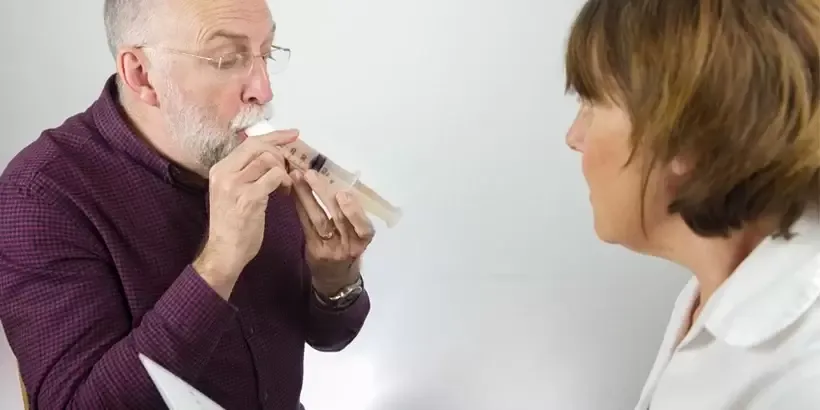
• Vagal manoeuvres can be used to determine the underlying rhythm or terminate SVT in haemodynamically stable patients. If the underlying rhythm is atrial flutter, slowing of the ventricular response by increasing vagal tone will reveal flutter waves
• Vagal manoeuvres are part of the adult peri-arrest algorithm for management of narrow complex tachycardia. They can be performed in a controlled clinical situation (i.e. attached to an ECG machine), or taught to the patient to perform at home if the sensation of the arrhythmia reoccurs.
Physiology
• Vagal manoeuvres increase vagal tone by activation of the parasympathetic nervous system, conducted to the heart by the vagus nerve
• Increasing vagal tone impedes the AV node and so slows transmission of the electrical impulse from the atria to the ventricle. In this way any SVT that relies upon the AV node will be modified by an increase in vagal tone.
Background
The Purpose
• Vagal manoeuvres can be used to determine the underlying rhythm or terminate SVT in haemodynamically stable patients. If the underlying rhythm is atrial flutter, slowing of the ventricular response by increasing vagal tone will reveal flutter waves
• Vagal manoeuvres are part of the adult peri-arrest algorithm for management of narrow complex tachycardia. They can be performed in a controlled clinical situation (i.e. attached to an ECG machine), or taught to the patient to perform at home if the sensation of the arrhythmia reoccurs.
Physiology
• Vagal manoeuvres increase vagal tone by activation of the parasympathetic nervous system, conducted to the heart by the vagus nerve
• Increasing vagal tone impedes the AV node and so slows transmission of the electrical impulse from the atria to the ventricle. In this way any SVT that relies upon the AV node will be modified by an increase in vagal tone.
0 Comments
