- Published on
Dermatology - Dyshidrotic Eczematous Dermatitis
Dyshidrotic eczema is a specific form of dermatitis that affects the hands and feet, characterized by the presence of vesicles. It can occur suddenly, last for a long time, or reoccur periodically.
Pruritus, which is itching, and occasionally pain manifest in the presence of lesions.
Abnormalities
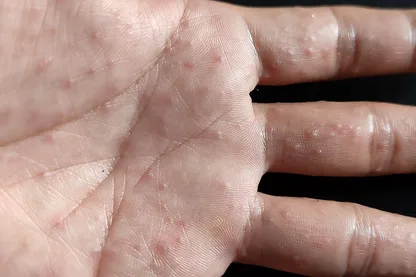
The individual has a rapid appearance of numerous itchy, deep-seated vesicles that resemble tapioca pearls. In some cases, huge bullae may also develop, a condition known as pompholyx. Subsequently, the formation of cracks and the thickening of the skin with lichenification may develop. Pustules, cellulitis, lymphangitis, and painful lymphadenopathy are indicative of a secondary infection.
The diagnosis is determined through clinical examination, and the possible causes include contact dermatitis, fungal infections, and viral exanthems.
For the treatment of the condition, the use of potent corticosteroids applied to the affected area is recommended. In addition, a little amount of triamcinolone at a concentration of 3 mg/mL can be injected directly into tiny areas. In severe cases, a short course of prednisone can be prescribed, starting with a dosage of 70 mg and gradually reducing it by either 10 or 5 mg over a period of 7 or 14 days. Systemic antibiotics may be necessary to treat any secondary infections, and PUVA therapy can be administered either orally or as soaks.
Dyshidrotic eczema is a specific form of dermatitis that affects the hands and feet, characterized by the presence of vesicles. It can occur suddenly, last for a long time, or reoccur periodically.
Pruritus, which is itching, and occasionally pain manifest in the presence of lesions.
Abnormalities
The individual has a rapid appearance of numerous itchy, deep-seated vesicles that resemble tapioca pearls. In some cases, huge bullae may also develop, a condition known as pompholyx. Subsequently, the formation of cracks and the thickening of the skin with lichenification may develop. Pustules, cellulitis, lymphangitis, and painful lymphadenopathy are indicative of a secondary infection.
The diagnosis is determined through clinical examination, and the possible causes include contact dermatitis, fungal infections, and viral exanthems.
For the treatment of the condition, the use of potent corticosteroids applied to the affected area is recommended. In addition, a little amount of triamcinolone at a concentration of 3 mg/mL can be injected directly into tiny areas. In severe cases, a short course of prednisone can be prescribed, starting with a dosage of 70 mg and gradually reducing it by either 10 or 5 mg over a period of 7 or 14 days. Systemic antibiotics may be necessary to treat any secondary infections, and PUVA therapy can be administered either orally or as soaks.
0 Comments
