- Published on
Dermatology - Hirsutism
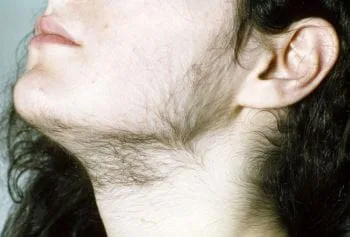
Hirsutism refers to the abnormal and excessive growth of hair in women, specifically in areas of the body that are influenced by male hormones, due to an increase in androgenic activity. Several factors contribute to this condition, such as the presence of androgen-secreting tumors, functional androgen excess, adrenal enzyme abnormalities, and medication responses.
Virilization symptoms encompass a range of manifestations such as hair loss following a masculine pattern, acne, a deepened vocal tone, heightened muscle mass, clitoromegaly, an enhanced sexual drive, and alterations in personality. Symptoms and indicators that appear suddenly or within a short period of time, unrelated to the process of puberty.
Amenorrhea, alterations in menstruation, and the sudden development of hypertension may also occur, particularly in cases when the underlying cause is androgen-secreting tumors. Furthermore, individuals may experience acne, acanthosis nigricans, and striae in addition to excessive hair growth.
Discoveries related to hair
There is noticeable regrowth of terminal hair, particularly on the face, chest, belly, upper back, and shoulders
The diagnosis is established based on laboratory findings. Polycystic ovarian syndrome is commonly found in the majority of women who have somewhat high testosterone levels. A level of 800 μg/d indicates the presence of an adrenal tumor. An elevated level of 17-hydroxyprogesterone indicates the presence of congenital adrenal hyperplasia, a condition that can be validated by conducting another test after administering ACTH stimulation. Elevated serum prolactin levels may indicate increased androgen secretion. Urinary 17-ketosteroid can be used to assess the total quantity of androgen secretion. If a person is experiencing oligomenorrhea or amenorrhea, it is important to assess the levels of prolactin, follicle-stimulating hormone (FSH), and total testosterone. Additionally, measuring serum DHEA sulfate can provide specific information about the adrenal glands, as more than 90% of cases are related to adrenal issues.
Cosmetic procedures encompass the processes of whitening and eliminating hair. Weight loss can be beneficial for individuals who are obese. Obesity leads to elevated levels of free testosterone and adds to insulin resistance.
It is recommended to get an endocrine consultation to exclude the possibility of late-onset congenital adrenal hyperplasia, Cushing syndrome, and tumor. Administration of spironolactone (100-200 mg per day), cyproterone acetate, or finasteride can be beneficial in the treatment of androgen-related conditions. Oral contraceptives hinder the production of androgens by suppressing the release of gonadotropins. They are most efficient when used in conjunction with antiandrogens. Bromocriptine is the medication of choice for treating prolactinoma.
Hirsutism refers to the abnormal and excessive growth of hair in women, specifically in areas of the body that are influenced by male hormones, due to an increase in androgenic activity. Several factors contribute to this condition, such as the presence of androgen-secreting tumors, functional androgen excess, adrenal enzyme abnormalities, and medication responses.
Virilization symptoms encompass a range of manifestations such as hair loss following a masculine pattern, acne, a deepened vocal tone, heightened muscle mass, clitoromegaly, an enhanced sexual drive, and alterations in personality. Symptoms and indicators that appear suddenly or within a short period of time, unrelated to the process of puberty.
Amenorrhea, alterations in menstruation, and the sudden development of hypertension may also occur, particularly in cases when the underlying cause is androgen-secreting tumors. Furthermore, individuals may experience acne, acanthosis nigricans, and striae in addition to excessive hair growth.
Discoveries related to hair
There is noticeable regrowth of terminal hair, particularly on the face, chest, belly, upper back, and shoulders
The diagnosis is established based on laboratory findings. Polycystic ovarian syndrome is commonly found in the majority of women who have somewhat high testosterone levels. A level of 800 μg/d indicates the presence of an adrenal tumor. An elevated level of 17-hydroxyprogesterone indicates the presence of congenital adrenal hyperplasia, a condition that can be validated by conducting another test after administering ACTH stimulation. Elevated serum prolactin levels may indicate increased androgen secretion. Urinary 17-ketosteroid can be used to assess the total quantity of androgen secretion. If a person is experiencing oligomenorrhea or amenorrhea, it is important to assess the levels of prolactin, follicle-stimulating hormone (FSH), and total testosterone. Additionally, measuring serum DHEA sulfate can provide specific information about the adrenal glands, as more than 90% of cases are related to adrenal issues.
Cosmetic procedures encompass the processes of whitening and eliminating hair. Weight loss can be beneficial for individuals who are obese. Obesity leads to elevated levels of free testosterone and adds to insulin resistance.
It is recommended to get an endocrine consultation to exclude the possibility of late-onset congenital adrenal hyperplasia, Cushing syndrome, and tumor. Administration of spironolactone (100-200 mg per day), cyproterone acetate, or finasteride can be beneficial in the treatment of androgen-related conditions. Oral contraceptives hinder the production of androgens by suppressing the release of gonadotropins. They are most efficient when used in conjunction with antiandrogens. Bromocriptine is the medication of choice for treating prolactinoma.
0 Comments
