- Published on
Pathology - Achalasia and Dysphagia
Pathophysiology
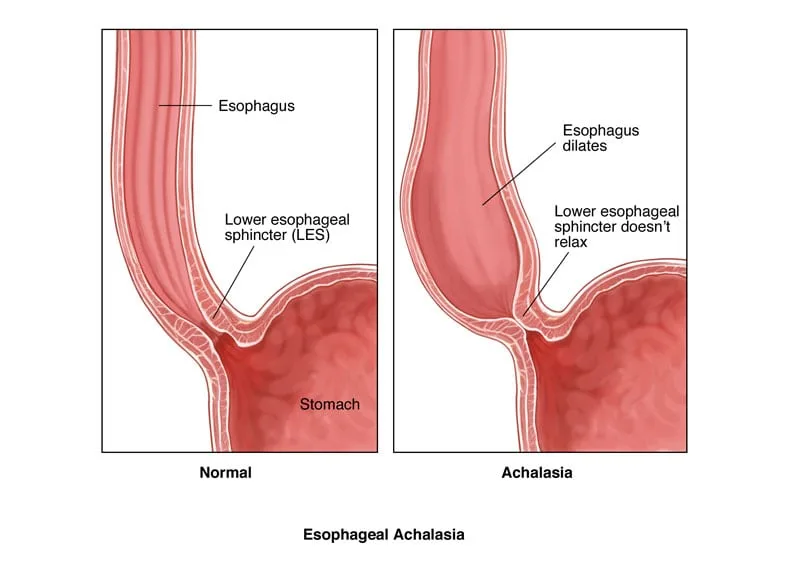
Dysphagia may arise from an esophageal motility disease or from issues during the oropharyngeal phase of swallowing. Even though the patient can swallow and produce a bolus, the food stops in the esophagus. The most prevalent causes of motility issues in the esophagus are innervation abnormalities or blockages like cancer. Interaction between inhibitory enteric neurons, which emit vasoactive intestinal polypeptide (VIP) and nitric oxide, and excitatory vagal and enteric neurons, which release acetylcholine and substance P as neurotransmitters, is necessary for coordinated peristalsis. Loss of inhibitory neurons is assumed to be the etiology of achalasia, leading to dysregulation of peristalsis and improper relaxation of the lower esophageal sphincter. The majority of cases are idiopathic, however infrequently occurring identified causative factors include cancer and Trypanosoma cruzi, the organism that causes Chagas disease
Pathophysiology
Dysphagia may arise from an esophageal motility disease or from issues during the oropharyngeal phase of swallowing. Even though the patient can swallow and produce a bolus, the food stops in the esophagus. The most prevalent causes of motility issues in the esophagus are innervation abnormalities or blockages like cancer. Interaction between inhibitory enteric neurons, which emit vasoactive intestinal polypeptide (VIP) and nitric oxide, and excitatory vagal and enteric neurons, which release acetylcholine and substance P as neurotransmitters, is necessary for coordinated peristalsis. Loss of inhibitory neurons is assumed to be the etiology of achalasia, leading to dysregulation of peristalsis and improper relaxation of the lower esophageal sphincter. The majority of cases are idiopathic, however infrequently occurring identified causative factors include cancer and Trypanosoma cruzi, the organism that causes Chagas disease
0 Comments
