- Published on
Pathology - Acute and Chronic Pancreatitis
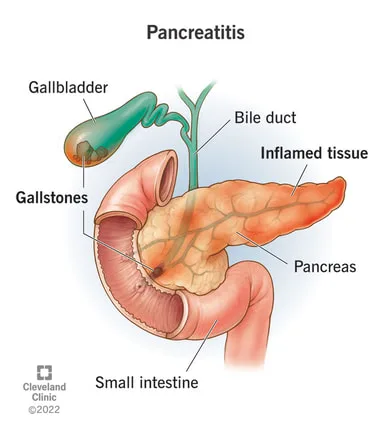
Acute pancreatitis is triggered by the activation of pancreatic enzymes leading to self-digestion of organs. It is linked to factors such as alcohol consumption, gallstones, high triglyceride levels, high calcium levels, certain medications (including thiazides and sulfonamides), mumps infection, and autoimmune disorders.
Chronic pancreatitis is a condition characterized by recurrent episodes of pancreatic inflammation, commonly linked to alcoholism and cystic fibrosis.
Pathology
Acute: Presence of hemorrhagic patches with regions of white fat necrosis. Microscopic findings include interstitial edema and inflammation, parenchymal necrosis with vascular injury, and calcium soap deposition.
Chronic condition characterized by fibrotic bands causing a lobular appearance, together with calcified concretions forming pseudocyst development. Microscopic findings show loss of acini with fibrous replacement, but the islets of Langerhans remain unaffected. mononuclear inflammatory infiltration
Symptoms and Signs
Acute: Intense pain in the upper abdomen and left upper quadrant that spreads to the back. Nausea, vomiting, and fever may develop with excessive alcohol consumption. Laboratory results: Leukocytosis, increased levels of serum lipase and amylase
Chronic: Repeated episodes of stomach and back discomfort; progression to pancreatic insufficiency resulting in malabsorption and diabetes. Laboratory results typically show normal levels of serum lipase and amylase.
Possible complications consist of disseminated intravascular coagulation (DIC), acute respiratory distress syndrome (ARDS), widespread fat necrosis, tetany, and acute kidney failure.
Treatment for acute condition includes supportive measures such as dietary restriction, intravenous fluids, Demerol for pain management, and the use of a nasogastric tube.
Treatment for chronic condition includes enzyme and insulin replacement therapy, as well as pain treatment.
Acute pancreatitis is triggered by the activation of pancreatic enzymes leading to self-digestion of organs. It is linked to factors such as alcohol consumption, gallstones, high triglyceride levels, high calcium levels, certain medications (including thiazides and sulfonamides), mumps infection, and autoimmune disorders.
Chronic pancreatitis is a condition characterized by recurrent episodes of pancreatic inflammation, commonly linked to alcoholism and cystic fibrosis.
Pathology
Acute: Presence of hemorrhagic patches with regions of white fat necrosis. Microscopic findings include interstitial edema and inflammation, parenchymal necrosis with vascular injury, and calcium soap deposition.
Chronic condition characterized by fibrotic bands causing a lobular appearance, together with calcified concretions forming pseudocyst development. Microscopic findings show loss of acini with fibrous replacement, but the islets of Langerhans remain unaffected. mononuclear inflammatory infiltration
Symptoms and Signs
Acute: Intense pain in the upper abdomen and left upper quadrant that spreads to the back. Nausea, vomiting, and fever may develop with excessive alcohol consumption. Laboratory results: Leukocytosis, increased levels of serum lipase and amylase
Chronic: Repeated episodes of stomach and back discomfort; progression to pancreatic insufficiency resulting in malabsorption and diabetes. Laboratory results typically show normal levels of serum lipase and amylase.
Possible complications consist of disseminated intravascular coagulation (DIC), acute respiratory distress syndrome (ARDS), widespread fat necrosis, tetany, and acute kidney failure.
Treatment for acute condition includes supportive measures such as dietary restriction, intravenous fluids, Demerol for pain management, and the use of a nasogastric tube.
Treatment for chronic condition includes enzyme and insulin replacement therapy, as well as pain treatment.
0 Comments
