- Published on
Pathology - Acute Bacterial Prostatitis
Primarily caused by gram-negative rods such as E. coli, Proteus mirabilis, Klebsiella, or Enterobacter, as well as N. gonorrhoeae or Enterococcus.
Risk factors comprise urinary tract infection, Foley catheterization, and recent transurethral surgery or cystoscopy.
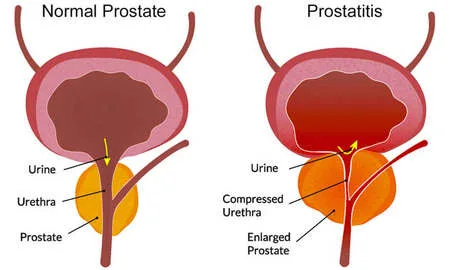
Pathology: The prostate gland is enlarged due to edema and congestion.
Microscopic examination reveals an inflammatory infiltration, typically lymphocytic, in the prostate stroma that may extend into the glandular regions.
Manifests with fever, dysuria, and perineal discomfort. Experiencing pain with a noticeable sensitive prostate upon examination. May sometimes be linked to urinary retention.
Possible complications involve the formation of a prostatic abscess or the presence of chronic prostatitis.
Laboratory results: Leukocytes detected in urinalysis; urine culture shows positive results.
Antibiotic treatment targeting the responsible bacterium often lasts for 30 days to prevent problems.
Chronic bacterial prostatitis can occur as a consequence of inadequate treatment of acute bacterial prostatitis. Patients exhibit genitourinary discomfort, dysuria, frequent urination, and recurring UTIs. Diagnosis is confirmed by detecting bacteria in produced prostatic secretions or urine culture following prostatic massage, comparable to those found in acute bacterial prostatitis. Treatment involves a 4- to 12-week regimen of antibiotics.
Primarily caused by gram-negative rods such as E. coli, Proteus mirabilis, Klebsiella, or Enterobacter, as well as N. gonorrhoeae or Enterococcus.
Risk factors comprise urinary tract infection, Foley catheterization, and recent transurethral surgery or cystoscopy.
Pathology: The prostate gland is enlarged due to edema and congestion.
Microscopic examination reveals an inflammatory infiltration, typically lymphocytic, in the prostate stroma that may extend into the glandular regions.
Manifests with fever, dysuria, and perineal discomfort. Experiencing pain with a noticeable sensitive prostate upon examination. May sometimes be linked to urinary retention.
Possible complications involve the formation of a prostatic abscess or the presence of chronic prostatitis.
Laboratory results: Leukocytes detected in urinalysis; urine culture shows positive results.
Antibiotic treatment targeting the responsible bacterium often lasts for 30 days to prevent problems.
Chronic bacterial prostatitis can occur as a consequence of inadequate treatment of acute bacterial prostatitis. Patients exhibit genitourinary discomfort, dysuria, frequent urination, and recurring UTIs. Diagnosis is confirmed by detecting bacteria in produced prostatic secretions or urine culture following prostatic massage, comparable to those found in acute bacterial prostatitis. Treatment involves a 4- to 12-week regimen of antibiotics.
0 Comments
