- Published on
Pathology - Acute Mitral Regurgitation
Pathophysiology
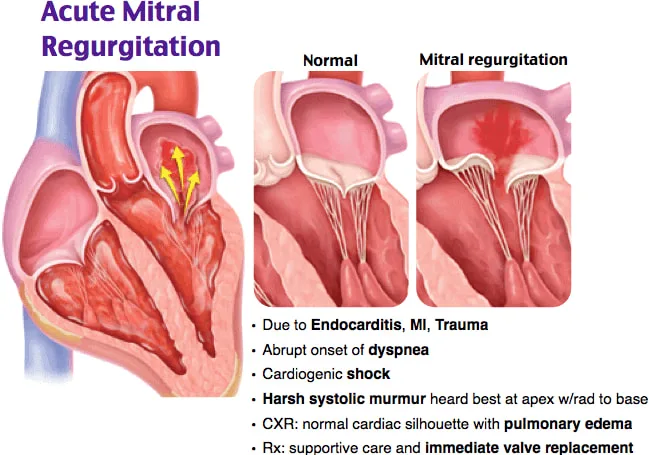
The rupture of the chordae tendinae, which connects the papillary muscles to the valve leaflets, results in acute mitral valve regurgitation. The holosystolic murmur is caused by regurgitant blood flowing from the left ventricle to the left atrium through the mitral valve. The murmur's decrescendo character indicates how quickly the left ventricle and left atrium's pressures equilibrated as a result of the significant blood regurgitation. The issue does not appear to be connected to a recent myocardial ischemia episode if there are no new ECG findings or changes in cardiac enzyme levels. Breathlessness is primarily caused by pulmonary edema, which is seen on the chest radiograph. Acute elevation of left atrial pressure results from regurgitation of blood into the left atrium. Pulmonary edema is the consequence of elevated pulmonary venous and capillary pressures brought on by elevated left atrial pressure. Pulmonary edema is far less common when chronic mitral valve regurgitation is present because left atrial compliance progressively rises with time.
Pathophysiology
The rupture of the chordae tendinae, which connects the papillary muscles to the valve leaflets, results in acute mitral valve regurgitation. The holosystolic murmur is caused by regurgitant blood flowing from the left ventricle to the left atrium through the mitral valve. The murmur's decrescendo character indicates how quickly the left ventricle and left atrium's pressures equilibrated as a result of the significant blood regurgitation. The issue does not appear to be connected to a recent myocardial ischemia episode if there are no new ECG findings or changes in cardiac enzyme levels. Breathlessness is primarily caused by pulmonary edema, which is seen on the chest radiograph. Acute elevation of left atrial pressure results from regurgitation of blood into the left atrium. Pulmonary edema is the consequence of elevated pulmonary venous and capillary pressures brought on by elevated left atrial pressure. Pulmonary edema is far less common when chronic mitral valve regurgitation is present because left atrial compliance progressively rises with time.
0 Comments
