- Published on
Pathology- Adult Onset Still Disease
The cause is unknown, although it is thought that genetic factors (people with HLA-B 17 or HLA-DR2) or infectious etiologies (viral; Mycoplasma) could be at play.
most prevalent in people with ages ranging from 15 to 45.
Skin: Dermal edema with lymphocytic and histiocytic infiltration; blood vessel walls may exhibit C3 deposition.
Synovial tissue: Infiltration of mononuclear cells causes long-term inflammatory alterations.
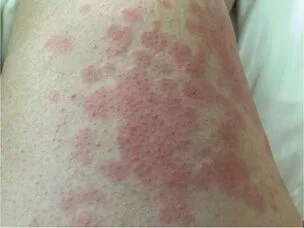
One to two daily ("quotidian or biquotidian") fever spikes accompanied by the development of a salmon-colored maculopapular rash on the trunk and limbs; the rash can also be triggered by skin irritation (Koebner phenomenon); polyarthralgias and arthritis, which typically affect the PIP joints, knees, wrists, and ankles; sore throat; lymphadenopathy; pericarditis.
Imaging: Narrowing of the nonerosive joint space, typically observed in the wrists.
Results from the lab: raised liver transaminases, elevated ferritin levels, negative ANA and RF, elevated ESR, 60% of patients may exhibit reactive thrombocytosis and/or anemia, and leukocytosis.
Treatments: glucocorticoids, NSAIDs, and TNF inhibitors (such as rituximab) for cases that don't respond.
Adult Onset Still Disease.
The adult form of juvenile idiopathic arthritis with systemic onset is known as still disease.
A kind of rheumatoid arthritis that affects youngsters is called juvenile idiopathic arthritis (JIA).
It includes multiple subtypes: pauciarticular onset JIA (defined by age of onset < 5 years, large joint mild arthralgias, uveitis, and a positive ANA), polyarticular onset JIA (defined by destructive arthritis in knees and wrists or dactylitis), and systemic onset JIA (defined by fever, rash, anemia, and hepatosplenomegaly).
The cause is unknown, although it is thought that genetic factors (people with HLA-B 17 or HLA-DR2) or infectious etiologies (viral; Mycoplasma) could be at play.
most prevalent in people with ages ranging from 15 to 45.
Skin: Dermal edema with lymphocytic and histiocytic infiltration; blood vessel walls may exhibit C3 deposition.
Synovial tissue: Infiltration of mononuclear cells causes long-term inflammatory alterations.
One to two daily ("quotidian or biquotidian") fever spikes accompanied by the development of a salmon-colored maculopapular rash on the trunk and limbs; the rash can also be triggered by skin irritation (Koebner phenomenon); polyarthralgias and arthritis, which typically affect the PIP joints, knees, wrists, and ankles; sore throat; lymphadenopathy; pericarditis.
Imaging: Narrowing of the nonerosive joint space, typically observed in the wrists.
Results from the lab: raised liver transaminases, elevated ferritin levels, negative ANA and RF, elevated ESR, 60% of patients may exhibit reactive thrombocytosis and/or anemia, and leukocytosis.
Treatments: glucocorticoids, NSAIDs, and TNF inhibitors (such as rituximab) for cases that don't respond.
Adult Onset Still Disease.
The adult form of juvenile idiopathic arthritis with systemic onset is known as still disease.
A kind of rheumatoid arthritis that affects youngsters is called juvenile idiopathic arthritis (JIA).
It includes multiple subtypes: pauciarticular onset JIA (defined by age of onset < 5 years, large joint mild arthralgias, uveitis, and a positive ANA), polyarticular onset JIA (defined by destructive arthritis in knees and wrists or dactylitis), and systemic onset JIA (defined by fever, rash, anemia, and hepatosplenomegaly).
0 Comments
