- Published on
Pathology - Alzheimer's DIsease
Pathophysiology
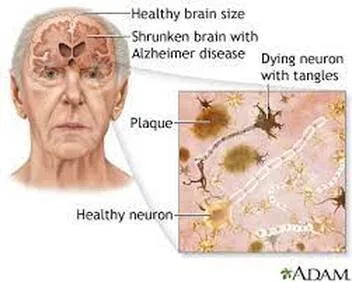
The hallmark of Alzheimer's disease (AD) is a progressive decline in short-term memory and cognitive function. Amyloid plaques and neurofibrillary tangles are the histopathologic characteristics of AD. Hyperphosphorylated tau proteins, which are the building blocks of neurofibrillary tangles, have an impact on the microtubules that are a component of the neuronal transport system. The neuronal cells are poisoned by the beta-amyloid plaques. Due to the APP gene's location on chromosome 21, individuals with Down syndrome (trisomy 21) are more likely to develop early Alzheimer's disease. AD development is linked to mutations in the presenilin genes and APP, which can be hereditary or spontaneous. Furthermore, abnormalities in the secretase-mediated APP degradation pathway may result in beta-amyloid accumulation. Additionally, there is a correlation between AD and the apolipoprotein E allele's inheritance. Imaging studies of AD patients usually show atrophy of the temporal lobes, which is most likely caused by hippocampal neuron death brought on by a buildup of beta-amyloid plaques. Acetylcholinesterase inhibitors, like donepezil, or cholinergic medications, such galantamine and rivastigmine, are commonly used in treatment.
According to certain research, vitamin E has some utility as an adjuvant but not as a stand-alone treatment.
Pathophysiology
The hallmark of Alzheimer's disease (AD) is a progressive decline in short-term memory and cognitive function. Amyloid plaques and neurofibrillary tangles are the histopathologic characteristics of AD. Hyperphosphorylated tau proteins, which are the building blocks of neurofibrillary tangles, have an impact on the microtubules that are a component of the neuronal transport system. The neuronal cells are poisoned by the beta-amyloid plaques. Due to the APP gene's location on chromosome 21, individuals with Down syndrome (trisomy 21) are more likely to develop early Alzheimer's disease. AD development is linked to mutations in the presenilin genes and APP, which can be hereditary or spontaneous. Furthermore, abnormalities in the secretase-mediated APP degradation pathway may result in beta-amyloid accumulation. Additionally, there is a correlation between AD and the apolipoprotein E allele's inheritance. Imaging studies of AD patients usually show atrophy of the temporal lobes, which is most likely caused by hippocampal neuron death brought on by a buildup of beta-amyloid plaques. Acetylcholinesterase inhibitors, like donepezil, or cholinergic medications, such galantamine and rivastigmine, are commonly used in treatment.
According to certain research, vitamin E has some utility as an adjuvant but not as a stand-alone treatment.
0 Comments
