- Published on
Pathology - Amyloidosis
Primary: Linked to dyscrasias of the plasma cell.
Secondary: Develops as a side effect of underlying long-term inflammatory conditions (RA, IBD) or long-term infections (TB, osteomyelitis).
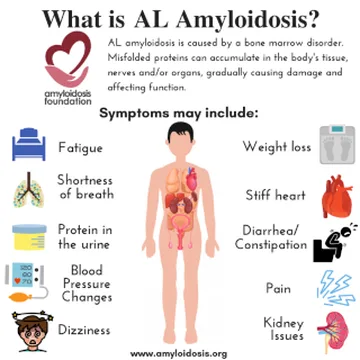
Primary: Monoclonal immunoglobulin light chains (AL protein) are deposited in the heart, gastrointestinal tract, muscles, brain, and kidneys, typically.
Secondary: The skin, GI tract, and kidneys are typically affected by the deposition of AA protein, which is produced from apolipoprotein precursors.
Histopathology: The amyloid protein exhibits apple-green birefringence when stained with Congo red.
Pathophysiology: Insoluble protein fibrils infiltrate tissues, resulting in impaired organ function.
The symptoms (such as nephrotic syndrome, renal failure, restrictive cardiomyopathy, arthritis, neuropathy, intestinal malabsorption, and respiratory failure) are associated with the malfunction of the implicated organ.
Management
First: prednisone and melphalan; organ transplant, then bone marrow transplant.
Secondary: Treating predisposed diseases aggressively.
Other conditions involving amyloid deposition include diabetes (islet amyloid polypeptide), Alzheimer's disease (amyloid beta protein), Portuguese type polyneuropathy (transthyretin), nephropathic hereditary amyloidosis (AA protein), medullary thyroid cancer (amyloid formed from calcitonin precursors), and dialysis amyloidosis (beta-microglobulin).
Primary: Linked to dyscrasias of the plasma cell.
Secondary: Develops as a side effect of underlying long-term inflammatory conditions (RA, IBD) or long-term infections (TB, osteomyelitis).
Primary: Monoclonal immunoglobulin light chains (AL protein) are deposited in the heart, gastrointestinal tract, muscles, brain, and kidneys, typically.
Secondary: The skin, GI tract, and kidneys are typically affected by the deposition of AA protein, which is produced from apolipoprotein precursors.
Histopathology: The amyloid protein exhibits apple-green birefringence when stained with Congo red.
Pathophysiology: Insoluble protein fibrils infiltrate tissues, resulting in impaired organ function.
The symptoms (such as nephrotic syndrome, renal failure, restrictive cardiomyopathy, arthritis, neuropathy, intestinal malabsorption, and respiratory failure) are associated with the malfunction of the implicated organ.
Management
First: prednisone and melphalan; organ transplant, then bone marrow transplant.
Secondary: Treating predisposed diseases aggressively.
Other conditions involving amyloid deposition include diabetes (islet amyloid polypeptide), Alzheimer's disease (amyloid beta protein), Portuguese type polyneuropathy (transthyretin), nephropathic hereditary amyloidosis (AA protein), medullary thyroid cancer (amyloid formed from calcitonin precursors), and dialysis amyloidosis (beta-microglobulin).
0 Comments
