- Published on
Pathology - Amyotrophic Lateral Sclerosis
The cause of sporadic amyotrophic lateral sclerosis (ALS) is unknown. 5%-10% of cases are familial and are inherited by autosomal dominant inheritance of a mutation on chromosome 21 or a deficiency in the SOD-1 gene, which is involved in scavenging free radicals.
Primarily impacts males over the age of 40.
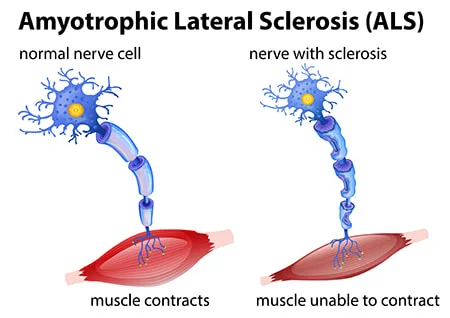
Progressive illness linked to the deterioration of both upper and lower motor neurons.
Spinal cord: Decreased anterior horn neurons with reactive gliosis; degeneration of corticospinal tract neurons.
Neurogenic atrophy of muscle with target fibers (fibers showing a dark center area on cross-section).
Lower motor neuron indications include muscular atrophy and fasciculations.
Upper motor neuron indications include hyperreflexia, positive Babinski sign, and spasticity.
Motor neuron degeneration typically manifests with first symptoms of hand weakness, cramping, and spasticity in the arms and legs. Engagement of respiratory muscles results in lung infections and ultimately mortality.
Therapy
Supportive Measures
Respiratory failure typically leads to death within 5 years of being diagnosed.
Werdnig-Hoffmann syndrome is an autosomal recessive disorder that impacts the lower motor neurons and is linked to the degradation of anterior horns. It manifests in infancy with tongue fasciculations and symptoms of a weak or floppy newborn.
The cause of sporadic amyotrophic lateral sclerosis (ALS) is unknown. 5%-10% of cases are familial and are inherited by autosomal dominant inheritance of a mutation on chromosome 21 or a deficiency in the SOD-1 gene, which is involved in scavenging free radicals.
Primarily impacts males over the age of 40.
Progressive illness linked to the deterioration of both upper and lower motor neurons.
Spinal cord: Decreased anterior horn neurons with reactive gliosis; degeneration of corticospinal tract neurons.
Neurogenic atrophy of muscle with target fibers (fibers showing a dark center area on cross-section).
Lower motor neuron indications include muscular atrophy and fasciculations.
Upper motor neuron indications include hyperreflexia, positive Babinski sign, and spasticity.
Motor neuron degeneration typically manifests with first symptoms of hand weakness, cramping, and spasticity in the arms and legs. Engagement of respiratory muscles results in lung infections and ultimately mortality.
Therapy
Supportive Measures
Respiratory failure typically leads to death within 5 years of being diagnosed.
Werdnig-Hoffmann syndrome is an autosomal recessive disorder that impacts the lower motor neurons and is linked to the degradation of anterior horns. It manifests in infancy with tongue fasciculations and symptoms of a weak or floppy newborn.
0 Comments
