- Published on
Pathology - Aortic Stenosis
Pathophysiology
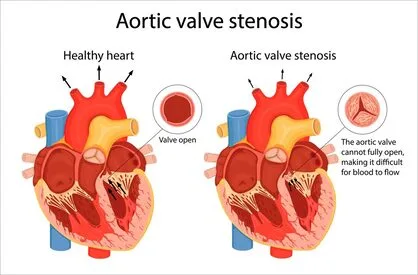
The most common cause of this in people over 65 is calcification and age-related deterioration of the valve. Because of the blood flow impedance during systole caused by valve stenosis, there is an increase in left ventricular afterload. Since the left ventricle must create a high pressure in order to expel blood through the narrow valve, the murmur's crescendo-decrescendo pattern reflects the nature of the pressure differential across the stenotic valve.
The inadequate stroke volume supplied to the aorta during systole is the cause of the weakening and delay of the carotid pulse. The onset of angina is a reflection of the stenosis getting worse and is brought on by the hypertrophied left ventricle's increased cardiac oxygen demand. A more concerning symptom is syncope, which is caused by a failure to sustain the brain's oxygen supply and an inability to increase cardiac output during exertion. Atrial contraction at the end of diastole pushes blood into a hypertrophied and rigid left ventricle, which results in the S4 sound. Although the patient does not already exhibit symptoms of heart failure, if therapy is not received, the circumstances in his left ventricle will probably cause this situation to worsen.
Pathophysiology
The most common cause of this in people over 65 is calcification and age-related deterioration of the valve. Because of the blood flow impedance during systole caused by valve stenosis, there is an increase in left ventricular afterload. Since the left ventricle must create a high pressure in order to expel blood through the narrow valve, the murmur's crescendo-decrescendo pattern reflects the nature of the pressure differential across the stenotic valve.
The inadequate stroke volume supplied to the aorta during systole is the cause of the weakening and delay of the carotid pulse. The onset of angina is a reflection of the stenosis getting worse and is brought on by the hypertrophied left ventricle's increased cardiac oxygen demand. A more concerning symptom is syncope, which is caused by a failure to sustain the brain's oxygen supply and an inability to increase cardiac output during exertion. Atrial contraction at the end of diastole pushes blood into a hypertrophied and rigid left ventricle, which results in the S4 sound. Although the patient does not already exhibit symptoms of heart failure, if therapy is not received, the circumstances in his left ventricle will probably cause this situation to worsen.
0 Comments
