- Published on
Pathology - Asthma
Pathophysiology
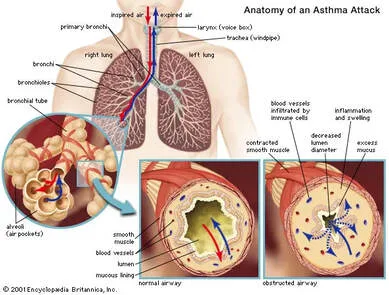
Wheezing, tightness in the chest, and shortness of breath are symptoms of this lung illness caused by inflammation of the airways and restriction of airflow. Bronchoconstriction, hyperreactivity, and excessive mucus production are the outcomes of a series of cellular activation events in the airways that are triggered by allergens or other "triggers," in this example, exercise and intense heat. If this reaction persists over time, aberrant lung architecture and function may arise. Tachycardia and tachypnea are brought on by the sympathetic nervous system being activated while the patient tries to breathe and oxygenate themselves.
The use of the sternocleidomastoid, intercostal, and abdominal muscles as accessory muscles is concerning and may be a symptom of airway compromise. The narrowing of bronchospastic and hyperreactive airways results in turbulent airflow, which produces the tubular wheezing sound. The most noticeable part of wheezing occurs during expiration, when the breathing process is extended and air becomes "trapped" in the distal airways, making it difficult for it to escape through smaller bronchioles and restricted medium bronchi. Pneumothorax or pleural effusion are less common when there is no tracheal deviation or asymmetric chest excursion. This patient needs to start treatment right away since he will soon become incapable of breathing on his own.
Pathophysiology
Wheezing, tightness in the chest, and shortness of breath are symptoms of this lung illness caused by inflammation of the airways and restriction of airflow. Bronchoconstriction, hyperreactivity, and excessive mucus production are the outcomes of a series of cellular activation events in the airways that are triggered by allergens or other "triggers," in this example, exercise and intense heat. If this reaction persists over time, aberrant lung architecture and function may arise. Tachycardia and tachypnea are brought on by the sympathetic nervous system being activated while the patient tries to breathe and oxygenate themselves.
The use of the sternocleidomastoid, intercostal, and abdominal muscles as accessory muscles is concerning and may be a symptom of airway compromise. The narrowing of bronchospastic and hyperreactive airways results in turbulent airflow, which produces the tubular wheezing sound. The most noticeable part of wheezing occurs during expiration, when the breathing process is extended and air becomes "trapped" in the distal airways, making it difficult for it to escape through smaller bronchioles and restricted medium bronchi. Pneumothorax or pleural effusion are less common when there is no tracheal deviation or asymmetric chest excursion. This patient needs to start treatment right away since he will soon become incapable of breathing on his own.
0 Comments
