- Published on
Pathology - Biventricular Heart Failure
Pathophysiology
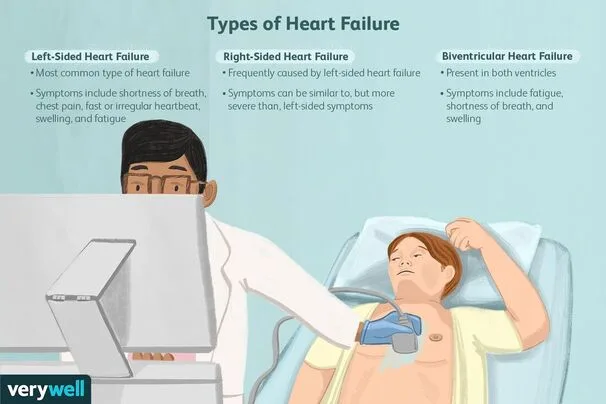
When the heart cannot keep up with the body's metabolic demands, this disease develops. Dysfunction of the left or right side of the heart can result in cardiac failure. Features like peripheral edema and jugular venous distention in this patient point to problems with the right ventricle's ability to pump blood forward effectively, which causes a fluid buildup in the right side of the heart and venous system. Dyspnea in the patient is consistent with left-sided heart failure, as are rales during examination and evidence of pulmonary effusion on radiograph. Either diastolic dysfunction (the left ventricle's inability to relax and fill properly) or systolic dysfunction (the left ventricle's inability to pump blood forward efficiently) can cause left-sided failure. As a result of left-sided heart failure, fluid builds up in the lungs. Variations in lung pressure occurring from left-sided heart failure may also affect the right side of the heart, leading to right-sided heart failure.
A chest radiograph's evaluation is important for diagnosing cardiomegaly, or the compensatory deficiency in heart function. The ECG results are in line with a history of inferior wall myocardial infarction; the right coronary artery and right ventricular inferior wall are the main vascular distribution sites. It is most likely the result of a prior cardiac damage and subsequent modifications in cardiac function that the patient's clinical presentation of heart failure represents.
Pathophysiology
When the heart cannot keep up with the body's metabolic demands, this disease develops. Dysfunction of the left or right side of the heart can result in cardiac failure. Features like peripheral edema and jugular venous distention in this patient point to problems with the right ventricle's ability to pump blood forward effectively, which causes a fluid buildup in the right side of the heart and venous system. Dyspnea in the patient is consistent with left-sided heart failure, as are rales during examination and evidence of pulmonary effusion on radiograph. Either diastolic dysfunction (the left ventricle's inability to relax and fill properly) or systolic dysfunction (the left ventricle's inability to pump blood forward efficiently) can cause left-sided failure. As a result of left-sided heart failure, fluid builds up in the lungs. Variations in lung pressure occurring from left-sided heart failure may also affect the right side of the heart, leading to right-sided heart failure.
A chest radiograph's evaluation is important for diagnosing cardiomegaly, or the compensatory deficiency in heart function. The ECG results are in line with a history of inferior wall myocardial infarction; the right coronary artery and right ventricular inferior wall are the main vascular distribution sites. It is most likely the result of a prior cardiac damage and subsequent modifications in cardiac function that the patient's clinical presentation of heart failure represents.
0 Comments
