- Published on
Pathology - Bruton Agammaglobulinemia
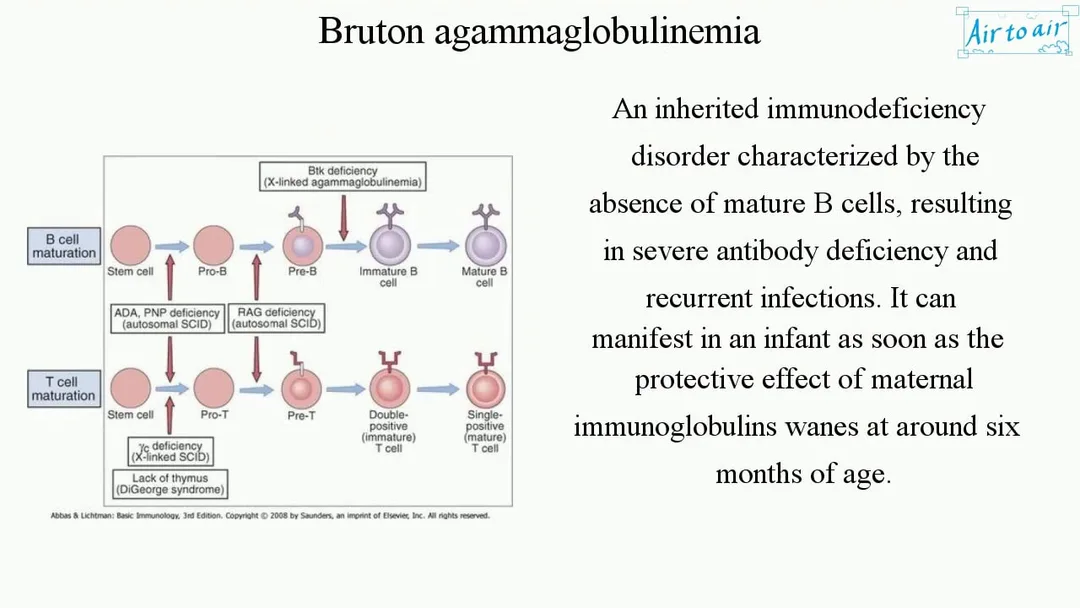
Bruton Agammaglobulinemia is a recessive X-linked tyrosine kinase gene deficiency that prevents B-cell precursors from developing into B cells.
most frequently observed in newborn boys.
Germinal centers are absent or ill-defined in lymphoid tissue.
occurs after six months of age, when levels of maternal IgG start to decrease, and manifests as recurrent pyogenic bacterial infections in boys (otitis media, sinusitis, pneumonia); cell-mediated immune function is normal.
Lab results: Absence of serum B cells and low levels of all immunoglobulin types.
routine IVIG treatment; infection management.
An X-linked recessive abnormality in the capacity to mount an IgM response to encapsulated bacteria, such as Pneumococcus, is known as Wiskott-Aldrich syndrome. Elevated IgA, low IgM, and normal IgG and total immunoglobulin levels are its defining characteristics. The patients exhibit a combination of eczema, petechiae, and bleeding due to thrombocytopenia, as well as recurring pyogenic infections. Splenectomy and bone marrow transplant are alternate supportive treatment options.
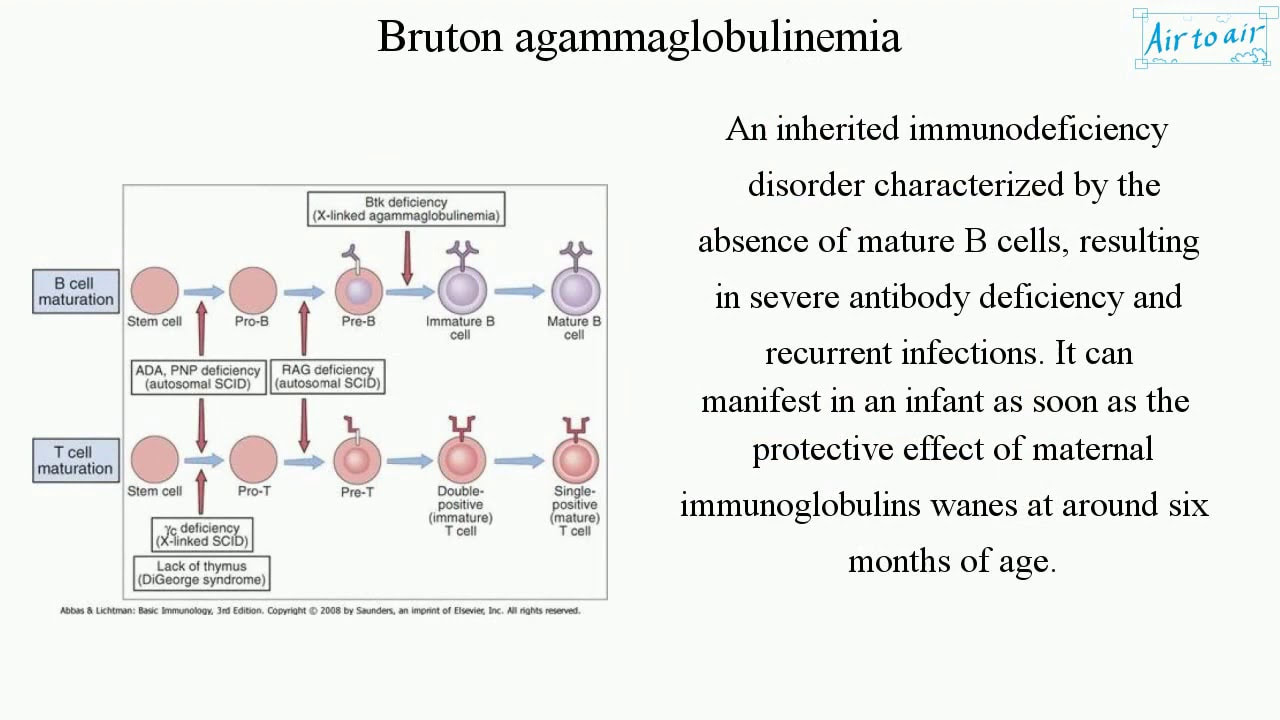
Bruton Agammaglobulinemia is a recessive X-linked tyrosine kinase gene deficiency that prevents B-cell precursors from developing into B cells.
most frequently observed in newborn boys.
Germinal centers are absent or ill-defined in lymphoid tissue.
occurs after six months of age, when levels of maternal IgG start to decrease, and manifests as recurrent pyogenic bacterial infections in boys (otitis media, sinusitis, pneumonia); cell-mediated immune function is normal.
Lab results: Absence of serum B cells and low levels of all immunoglobulin types.
routine IVIG treatment; infection management.
An X-linked recessive abnormality in the capacity to mount an IgM response to encapsulated bacteria, such as Pneumococcus, is known as Wiskott-Aldrich syndrome. Elevated IgA, low IgM, and normal IgG and total immunoglobulin levels are its defining characteristics. The patients exhibit a combination of eczema, petechiae, and bleeding due to thrombocytopenia, as well as recurring pyogenic infections. Splenectomy and bone marrow transplant are alternate supportive treatment options.
0 Comments
