- Published on
Pathology - Carcinoid Syndrome
Resulting from the release of serotonin by specific carcinoid tumors
Affects 1% of individuals with carcinoid tumors
Pathology
Carcinoid tumor A yellowish-tan mass is commonly found in the appendix but can also be present in various organs such as the gastrointestinal tract, pancreas, respiratory tract, gallbladder, thymus, and reproductive organs.
The tumor cells originate from neuroendocrine cells in the gastrointestinal system and feature pink granular cytoplasm with stippled nuclei when viewed under a microscope.
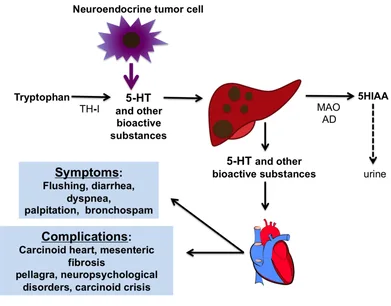
Pathophysiology: Carcinoid syndrome is a result of carcinoid tumor metastases in the liver. Carcinoid tumors in the colon secrete serotonin into the portal circulation, where it is processed and eliminated. Hepatic metastases emit serotonin into the hepatic portal vein, which enters the systemic circulation, causing carcinoid syndrome.
Clinical Symptoms
Recurring watery diarrhea, face flushing, asthma with bronchospasm, and right-sided valvular disease affecting the pulmonic and tricuspid valves, which increases the patient's risk of endocarditis and right-sided heart failure.
Laboratory results: Elevated amounts of 5-HIAA in the urine.
Cyproheptadine is used to treat diarrhea by blocking histamine receptors; octreotide acetate decreases urinary 5-HIAA levels; surgery is performed for localized carcinoid tumors.
The 5-year survival rate for carcinoid tumors is 90%.
The most prevalent tumor found in the appendix is the carcinoid tumor.
Individuals who have used fen-phen diet pills may develop left-sided cardiac disease in carcinoid syndrome.
Resulting from the release of serotonin by specific carcinoid tumors
Affects 1% of individuals with carcinoid tumors
Pathology
Carcinoid tumor A yellowish-tan mass is commonly found in the appendix but can also be present in various organs such as the gastrointestinal tract, pancreas, respiratory tract, gallbladder, thymus, and reproductive organs.
The tumor cells originate from neuroendocrine cells in the gastrointestinal system and feature pink granular cytoplasm with stippled nuclei when viewed under a microscope.
Pathophysiology: Carcinoid syndrome is a result of carcinoid tumor metastases in the liver. Carcinoid tumors in the colon secrete serotonin into the portal circulation, where it is processed and eliminated. Hepatic metastases emit serotonin into the hepatic portal vein, which enters the systemic circulation, causing carcinoid syndrome.
Clinical Symptoms
Recurring watery diarrhea, face flushing, asthma with bronchospasm, and right-sided valvular disease affecting the pulmonic and tricuspid valves, which increases the patient's risk of endocarditis and right-sided heart failure.
Laboratory results: Elevated amounts of 5-HIAA in the urine.
Cyproheptadine is used to treat diarrhea by blocking histamine receptors; octreotide acetate decreases urinary 5-HIAA levels; surgery is performed for localized carcinoid tumors.
The 5-year survival rate for carcinoid tumors is 90%.
The most prevalent tumor found in the appendix is the carcinoid tumor.
Individuals who have used fen-phen diet pills may develop left-sided cardiac disease in carcinoid syndrome.
0 Comments
