- Published on
Pathology - Cardiogenic Shock
Pathophysiology
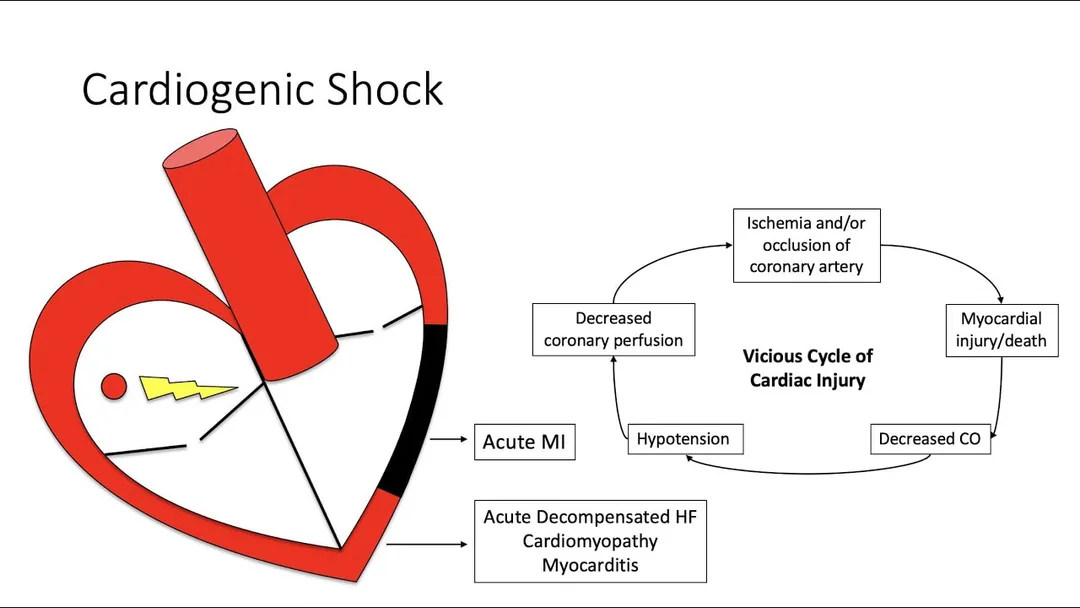
This kind of shock happens when the heart's pumping capacity is insufficient to keep tissues and organs perfused. This is most frequently caused by a large-scale left ventricular myocardial infarction, though mitral valve rupture or cardiac tamponade can also cause it.
The clinical presentation resembles that of hypovolemic shock, which is characterized by a broad underperfusion of bodily tissues and accompanying organ congestion brought on by venous blood backlog from the heart's incapacity to pump blood forward. The patient in the vignette experienced an abrupt decrease in blood flow and congestion, which led to congested lung fields, hypotension, and compensatory tachycardia. Reduced peripheral perfusion manifests physically as a weak pulse and chilly skin as blood is directed more into internal organs.
His oliguria is the result of both renal vasoconstriction, which lowers glomerular filtration, and hormonal attempts to hold onto free water (aldosterone production). The changed mental state of the patient is suggestive of inadequate cerebral perfusion. Vasoactive drugs like dopamine, epinephrine, or norepinephrine as well as intravenous fluid therapy are desperately needed to increase peripheral resistance and vascular volume in order to eventually restore central perfusion.
Pathophysiology
This kind of shock happens when the heart's pumping capacity is insufficient to keep tissues and organs perfused. This is most frequently caused by a large-scale left ventricular myocardial infarction, though mitral valve rupture or cardiac tamponade can also cause it.
The clinical presentation resembles that of hypovolemic shock, which is characterized by a broad underperfusion of bodily tissues and accompanying organ congestion brought on by venous blood backlog from the heart's incapacity to pump blood forward. The patient in the vignette experienced an abrupt decrease in blood flow and congestion, which led to congested lung fields, hypotension, and compensatory tachycardia. Reduced peripheral perfusion manifests physically as a weak pulse and chilly skin as blood is directed more into internal organs.
His oliguria is the result of both renal vasoconstriction, which lowers glomerular filtration, and hormonal attempts to hold onto free water (aldosterone production). The changed mental state of the patient is suggestive of inadequate cerebral perfusion. Vasoactive drugs like dopamine, epinephrine, or norepinephrine as well as intravenous fluid therapy are desperately needed to increase peripheral resistance and vascular volume in order to eventually restore central perfusion.
0 Comments
