- Published on
Pathology - Chronic Granulomatous Disease of Childhood
Caused by hereditary recessive or X-linked abnormalities in genes that code for parts of the superoxide-producing enzyme NADPH oxidase.
Ninety percent of patients are men, and most of them show up in the first year of life.
The myeloperoxidase-halide system is how neutrophils fight off germs. H2O2 is necessary for the myeloperoxidase halide system to work. NADPH oxidase and bacterial metabolism both produce H202. Bacterial metabolism produces H202, which can be destroyed by species that generate catalase, such as Staphylococcus. The myeloperoxidase-halide system cannot destroy catalase-positive bacteria in the absence of NADPH oxidase activity, which also eliminates the source of H202.
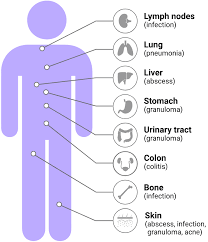
shows a clear predisposition to opportunistic infections caused by catalase-positive bacteria and fungi, such as Aspergillus, S aureus, E coli, and Serratia. Subcutaneous abscesses, infectious dermatitis, and recurrent pneumonia are common presentations for patients.
Results from the lab: Nitroblue tetrazolium dye reduction test results are negative due to the lack of reactive H202 intermediates.
Treatment options include stem cell transplantation, interferon-gamma therapy for infection prophylaxis, antibiotics for infections, and donor granulocyte transfusions.
Microtubules and phagocyte lysosomal emptying are both impacted by the autosomal recessive leukocyte function abnormality known as Chediak-Higashi syndrome. Neutropenia, albinism, hemorrhage, neuropathy, and recurrent Staphylococcus and Streptococcus infections are some of the symptoms that are seen.
LFA-1 adhesion proteins on the surface of phagocytes have a malfunction that results in leukocyte adhesion deficit syndrome. It first manifests as severe pyogenic infections and poor wound healing in infancy.
Caused by hereditary recessive or X-linked abnormalities in genes that code for parts of the superoxide-producing enzyme NADPH oxidase.
Ninety percent of patients are men, and most of them show up in the first year of life.
The myeloperoxidase-halide system is how neutrophils fight off germs. H2O2 is necessary for the myeloperoxidase halide system to work. NADPH oxidase and bacterial metabolism both produce H202. Bacterial metabolism produces H202, which can be destroyed by species that generate catalase, such as Staphylococcus. The myeloperoxidase-halide system cannot destroy catalase-positive bacteria in the absence of NADPH oxidase activity, which also eliminates the source of H202.
shows a clear predisposition to opportunistic infections caused by catalase-positive bacteria and fungi, such as Aspergillus, S aureus, E coli, and Serratia. Subcutaneous abscesses, infectious dermatitis, and recurrent pneumonia are common presentations for patients.
Results from the lab: Nitroblue tetrazolium dye reduction test results are negative due to the lack of reactive H202 intermediates.
Treatment options include stem cell transplantation, interferon-gamma therapy for infection prophylaxis, antibiotics for infections, and donor granulocyte transfusions.
Microtubules and phagocyte lysosomal emptying are both impacted by the autosomal recessive leukocyte function abnormality known as Chediak-Higashi syndrome. Neutropenia, albinism, hemorrhage, neuropathy, and recurrent Staphylococcus and Streptococcus infections are some of the symptoms that are seen.
LFA-1 adhesion proteins on the surface of phagocytes have a malfunction that results in leukocyte adhesion deficit syndrome. It first manifests as severe pyogenic infections and poor wound healing in infancy.
0 Comments
