- Published on
Pathology-Chronic Mesenteric Ischemia (Ischemic Colitis)
Pathophysiology
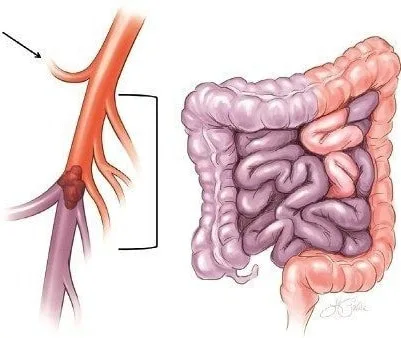
When at least two of the three main arteries leading to the gastrointestinal tract—the celiac, superior, and inferior mesenteric arteries—have atherosclerotic constriction, it results in chronic mesenteric ischemia. The traditional trio of symptoms—weight loss, abdominal bruit, and postprandial pain (abdominal angina)—are all present in this case. To confirm the diagnosis, angiogram is required to look at significant vascular stenosis. The SNS's activity as a result of extreme pain is reflected in the vital signs. Due to fixed vascular stenosis, which reduces blood supply to the stomach and small intestinal mucosa, the pain is brought on by bowel ischemia. Normal postprandial enteric blood flow rises in response to the demands of digestion on metabolism. Vasodilation is typically mediated by local metabolites, VIP-ergic enteric neurons, and vagus nerve stimulation; however, significant vascular stenosis prevents this from working. Bowel infarction is unlikely in this instance since collateral circulations have gradually developed. On the other hand, acute mesenteric ischemia brought on by unexpected vascular blockage is a serious medical emergency with a high death rate.
Pathophysiology
When at least two of the three main arteries leading to the gastrointestinal tract—the celiac, superior, and inferior mesenteric arteries—have atherosclerotic constriction, it results in chronic mesenteric ischemia. The traditional trio of symptoms—weight loss, abdominal bruit, and postprandial pain (abdominal angina)—are all present in this case. To confirm the diagnosis, angiogram is required to look at significant vascular stenosis. The SNS's activity as a result of extreme pain is reflected in the vital signs. Due to fixed vascular stenosis, which reduces blood supply to the stomach and small intestinal mucosa, the pain is brought on by bowel ischemia. Normal postprandial enteric blood flow rises in response to the demands of digestion on metabolism. Vasodilation is typically mediated by local metabolites, VIP-ergic enteric neurons, and vagus nerve stimulation; however, significant vascular stenosis prevents this from working. Bowel infarction is unlikely in this instance since collateral circulations have gradually developed. On the other hand, acute mesenteric ischemia brought on by unexpected vascular blockage is a serious medical emergency with a high death rate.
0 Comments
