- Published on
Pathology - Chronic Respiratory Acidemia
Pathophysiology
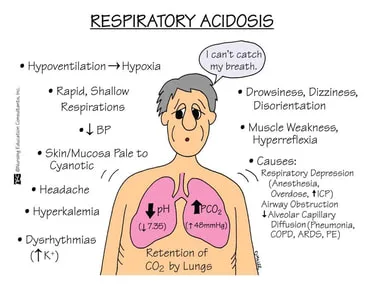
Acidemia (pH <7.35) caused by persistent respiratory acidosis is a representation of chronic respiratory acidosis.
It may also be presented with hypoxemia (Sao2 <90%) . Both stem from long-term lung illness. Inadequate CO2 excretion is caused by decreased alveolar ventilation. The ensuing hypercarbia lowers arterial pH and causes a respiratory acidosis (Paco2 >45 mm Hg). Renal compensation has occurred because this is a chronic disease, limiting the drop in arterial pH. Increased renal bicarbonate production and increased urine acid excretion, mostly by ammoniagenesis, are components of renal compensation. HCO3- >28 mEq/L is the secondary (compensatory) metabolic alkalosis that arises from compensating for the underlying respiratory acidosis. The patient's hypoxemia is caused by a combination of high CO2 levels, which displace oxygen from alveoli, and ventilation-perfusion mismatch, which is brought on by the breakdown of the lung architecture in emphysema. An elevated hematocrit level results from chronic hypoxia, which also raises red blood cell synthesis and boosts renal erythropoietin secretion. The patient's PaO2 (less than 55 mm Hg) or SaO2 (less than 88% at rest) meet the requirements for home oxygen therapy.
Pathophysiology
Acidemia (pH <7.35) caused by persistent respiratory acidosis is a representation of chronic respiratory acidosis.
It may also be presented with hypoxemia (Sao2 <90%) . Both stem from long-term lung illness. Inadequate CO2 excretion is caused by decreased alveolar ventilation. The ensuing hypercarbia lowers arterial pH and causes a respiratory acidosis (Paco2 >45 mm Hg). Renal compensation has occurred because this is a chronic disease, limiting the drop in arterial pH. Increased renal bicarbonate production and increased urine acid excretion, mostly by ammoniagenesis, are components of renal compensation. HCO3- >28 mEq/L is the secondary (compensatory) metabolic alkalosis that arises from compensating for the underlying respiratory acidosis. The patient's hypoxemia is caused by a combination of high CO2 levels, which displace oxygen from alveoli, and ventilation-perfusion mismatch, which is brought on by the breakdown of the lung architecture in emphysema. An elevated hematocrit level results from chronic hypoxia, which also raises red blood cell synthesis and boosts renal erythropoietin secretion. The patient's PaO2 (less than 55 mm Hg) or SaO2 (less than 88% at rest) meet the requirements for home oxygen therapy.
0 Comments
