- Published on
Pathology - Colorectal Adenocarcinoma
Risk factors including adenomatous polyps, chronic ulcerative colitis, low-fiber diet, advanced age, family history of the disease, hereditary nonpolyposis colorectal cancer (HNPCC), and familial adenomatous polyposis (FAP).
Typically manifests between the ages of 60 and 80.
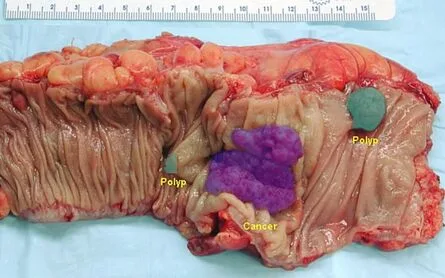
Pathology: Gross Appearance ranges from a polypoid mass in the proximal colon to lesions with ulcerated cores and uneven edges that encircle the bowel in the distal colon.
Micronc: Dysplastic columnar cells arranged in glands, capable of mucin production. Some cancers may exhibit anaplasia.
Clinical Symptoms
May have no symptoms; if symptoms are present, they include pallor, weight loss, intermittent diarrhea, Left Lower Quadrant pain, or blockage.
Laboratory results: Positive stool guaiac test, elevated serum CEA levels, and microcytic, hypochromic anemia indicative of iron deficiency anemia due to gastrointestinal bleeding.
Treatment: Surgical excision followed by chemotherapy with 5FU.
Colorectal cancer is the second most common cause of death from cancer in the United States. Preventive strategies involve conducting colonoscopy screenings every 10 years for all patients over the age of 50.
Risk factors including adenomatous polyps, chronic ulcerative colitis, low-fiber diet, advanced age, family history of the disease, hereditary nonpolyposis colorectal cancer (HNPCC), and familial adenomatous polyposis (FAP).
Typically manifests between the ages of 60 and 80.
Pathology: Gross Appearance ranges from a polypoid mass in the proximal colon to lesions with ulcerated cores and uneven edges that encircle the bowel in the distal colon.
Micronc: Dysplastic columnar cells arranged in glands, capable of mucin production. Some cancers may exhibit anaplasia.
Clinical Symptoms
May have no symptoms; if symptoms are present, they include pallor, weight loss, intermittent diarrhea, Left Lower Quadrant pain, or blockage.
Laboratory results: Positive stool guaiac test, elevated serum CEA levels, and microcytic, hypochromic anemia indicative of iron deficiency anemia due to gastrointestinal bleeding.
Treatment: Surgical excision followed by chemotherapy with 5FU.
Colorectal cancer is the second most common cause of death from cancer in the United States. Preventive strategies involve conducting colonoscopy screenings every 10 years for all patients over the age of 50.
0 Comments
