- Published on
Pathology - Deep Vein Thrombosis
Pathophysiology
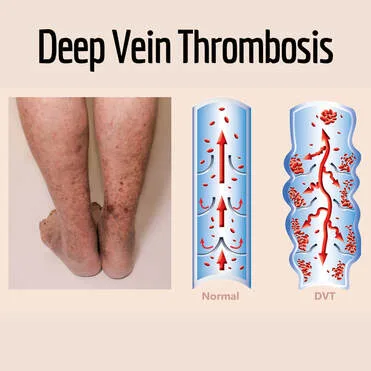
This disease is caused by a blood clot that forms in the deep veins, frequently with vessel wall inflammation. The two main clinical outcomes of this illness are postphlebitic syndrome and pulmonary embolization. Age, active cancer, recent surgery, immobility (such as during a lengthy flight), and genetic coagulation problems (antithrombin deficiency, proteins C or S deficits, for example) are risk factors for this illness. Individuals typically arrive with painful unilateral edema in their lower extremities (upper extremities can be affected less frequently). In the event of lung embolization, symptoms such as dyspnea and chest discomfort could manifest. Due to vascular impairment or injury, these individuals frequently have fever because inflammatory cytokines are released.
Anticoagulation is necessary for this condition in order to stop more clotting, and any underlying disorders must be managed as well. Patients with the condition who don't have a documented cause or risk factor need to be closely assessed. It is important to distinguish this illness from cellulitis, an infectious skin infection that can present quite similarly. Most of the time, appropriate laboratory testing and medical imaging can distinguish between the two illnesses.
Pathophysiology
This disease is caused by a blood clot that forms in the deep veins, frequently with vessel wall inflammation. The two main clinical outcomes of this illness are postphlebitic syndrome and pulmonary embolization. Age, active cancer, recent surgery, immobility (such as during a lengthy flight), and genetic coagulation problems (antithrombin deficiency, proteins C or S deficits, for example) are risk factors for this illness. Individuals typically arrive with painful unilateral edema in their lower extremities (upper extremities can be affected less frequently). In the event of lung embolization, symptoms such as dyspnea and chest discomfort could manifest. Due to vascular impairment or injury, these individuals frequently have fever because inflammatory cytokines are released.
Anticoagulation is necessary for this condition in order to stop more clotting, and any underlying disorders must be managed as well. Patients with the condition who don't have a documented cause or risk factor need to be closely assessed. It is important to distinguish this illness from cellulitis, an infectious skin infection that can present quite similarly. Most of the time, appropriate laboratory testing and medical imaging can distinguish between the two illnesses.
0 Comments
