- Published on
Pathology - Diabetes Mellitus
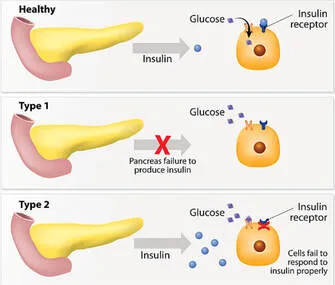
Type 1 diabetes results from the loss of pancreatic beta cells due to genetic predisposition (HLA-DR3 or -DR4), autoimmune responses, and environmental factors (such as Coxsackie and other viruses). It typically affects individuals under 20 years old.
Type 2 diabetes is characterized by peripheral tissue insulin resistance due to reduced insulin receptors and decreased responsiveness of beta cells to glucose. Approximately 90% of type 2 diabetes patients have a family history of the condition and it commonly affects obese middle-aged individuals.
Hyperglycemia causes elevated glucose excretion in urine, resulting in osmotic diuresis which leads to increased urine output and loss of water and electrolytes (polyuria). This leads to plasma hyperosmolarity which triggers thirst receptors, causing polydipsia.
Insufficient insulin leads to the breakdown of proteins and fats, resulting in weight loss despite an increase in appetite, as seen in type 1 diabetes mellitus.
Enhanced breakdown of fats leads to elevated free fatty acid levels, which results in the generation of ketone bodies and can lead to ketoacidosis, as seen in type 1 diabetes mellitus.
Type 1 diabetes symptoms include hyperglycemia, glycosuria, polyuria, polydipsia, weight loss despite increased appetite, and ketoacidosis characterized by dehydration, deep and fast (Kussmaul) breathing, fruity breath, anion-gap metabolic acidosis, ketonemia, and ketonuria.
Type 2 diabetes symptoms may include high blood sugar levels, sugar in urine, excessive urination, skin or vaginal infections, and nonketotic hyperosmolar coma.
Maturity-onset diabetes of the young (MODY) is a kind of diabetes that results from autosomal dominant genetic abnormalities affecting pancreatic beta-cell activity.
Type 1: Islet atrophy; Infiltration of T-lymphocytes.
Type 2 involves the replacement of islets with amyloid and a slight decrease in islet size.
Pathophysiology: Nonenzymatic glycosylation of proteins in artery walls and tissues results in the entrapment of molecules like LDL and plasma proteins, leading to problems. Hyperglycemia can elevate intracellular sorbitol levels, resulting in osmotic cell injury, particularly in the lens.
Ocular problems may include cataracts, glaucoma, and proliferative retinopathy, which can lead to blindness.
Accelerated atherosclerosis can cause myocardial infarction, gangrene, and stroke by trapping low-density lipoprotein (LDL) in endothelial cells.
Diabetic microangiopathy, caused by NEG, results in thickening of basement membranes in many tissues such as the retina, kidney, skin, and skeletal muscle. This condition can cause delayed wound healing and increase the risk of infection.
Diabetic nephropathy is caused by damage to basement membranes.
Peripheral and autonomic neuropathy can cause a loss of sensation in a stocking-glove distribution, along with delayed motor movements, discomfort, and autonomic instability.
Treatment includes dietary restrictions, insulin replacement for type 1 diabetes, hypoglycemic medicines such as sulfonylureas or insulin for type 2 diabetes, statins for atherosclerosis, and ACE inhibitors for diabetic nephropathy.
Long-term glucose regulation, for example, spanning over a period of 3 months, can be evaluated by measuring the levels of glycosylated hemoglobin (HbA1).
Type 1 diabetes results from the loss of pancreatic beta cells due to genetic predisposition (HLA-DR3 or -DR4), autoimmune responses, and environmental factors (such as Coxsackie and other viruses). It typically affects individuals under 20 years old.
Type 2 diabetes is characterized by peripheral tissue insulin resistance due to reduced insulin receptors and decreased responsiveness of beta cells to glucose. Approximately 90% of type 2 diabetes patients have a family history of the condition and it commonly affects obese middle-aged individuals.
Hyperglycemia causes elevated glucose excretion in urine, resulting in osmotic diuresis which leads to increased urine output and loss of water and electrolytes (polyuria). This leads to plasma hyperosmolarity which triggers thirst receptors, causing polydipsia.
Insufficient insulin leads to the breakdown of proteins and fats, resulting in weight loss despite an increase in appetite, as seen in type 1 diabetes mellitus.
Enhanced breakdown of fats leads to elevated free fatty acid levels, which results in the generation of ketone bodies and can lead to ketoacidosis, as seen in type 1 diabetes mellitus.
Type 1 diabetes symptoms include hyperglycemia, glycosuria, polyuria, polydipsia, weight loss despite increased appetite, and ketoacidosis characterized by dehydration, deep and fast (Kussmaul) breathing, fruity breath, anion-gap metabolic acidosis, ketonemia, and ketonuria.
Type 2 diabetes symptoms may include high blood sugar levels, sugar in urine, excessive urination, skin or vaginal infections, and nonketotic hyperosmolar coma.
Maturity-onset diabetes of the young (MODY) is a kind of diabetes that results from autosomal dominant genetic abnormalities affecting pancreatic beta-cell activity.
Type 1: Islet atrophy; Infiltration of T-lymphocytes.
Type 2 involves the replacement of islets with amyloid and a slight decrease in islet size.
Pathophysiology: Nonenzymatic glycosylation of proteins in artery walls and tissues results in the entrapment of molecules like LDL and plasma proteins, leading to problems. Hyperglycemia can elevate intracellular sorbitol levels, resulting in osmotic cell injury, particularly in the lens.
Ocular problems may include cataracts, glaucoma, and proliferative retinopathy, which can lead to blindness.
Accelerated atherosclerosis can cause myocardial infarction, gangrene, and stroke by trapping low-density lipoprotein (LDL) in endothelial cells.
Diabetic microangiopathy, caused by NEG, results in thickening of basement membranes in many tissues such as the retina, kidney, skin, and skeletal muscle. This condition can cause delayed wound healing and increase the risk of infection.
Diabetic nephropathy is caused by damage to basement membranes.
Peripheral and autonomic neuropathy can cause a loss of sensation in a stocking-glove distribution, along with delayed motor movements, discomfort, and autonomic instability.
Treatment includes dietary restrictions, insulin replacement for type 1 diabetes, hypoglycemic medicines such as sulfonylureas or insulin for type 2 diabetes, statins for atherosclerosis, and ACE inhibitors for diabetic nephropathy.
Long-term glucose regulation, for example, spanning over a period of 3 months, can be evaluated by measuring the levels of glycosylated hemoglobin (HbA1).
0 Comments
