- Published on
Pathology - Diverticular Disease
Pathophysiology
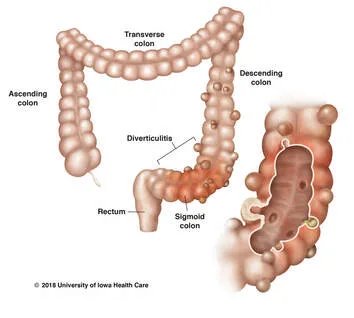
The diverticular muscle layer (teniae coli) of the colon makes it prone to diverticula development. Diverticula may form as a result of the colonic wall deteriorating with age and the high intraluminal pressures brought on by segmenting (mixing) contractions. These conditions can also generate mucosal and submucosal herniations through the muscularis propria. The most frequent location is the sigmoid colon, which is in line with where the patient's pain is located. One risk factor is a diet deficient in fiber. Leukocytosis and fever indicate diverticulitis, an inflammatory condition brought on by the deterioration of the diverticular wall and potential fecal blockage.
To reduce the danger of bowel perforation, a CT scan should be utilized instead of an endoscopy once the diagnosis has been confirmed. Blood in the stool denotes no diverticular hemorrhage, and the absence of generalized abdominal discomfort or hemodynamic instability suggests no intestinal perforation or peritonitis. The majority of patients respond well to conservative medical treatment, which includes antibiotics and colonic rest.
Pathophysiology
The diverticular muscle layer (teniae coli) of the colon makes it prone to diverticula development. Diverticula may form as a result of the colonic wall deteriorating with age and the high intraluminal pressures brought on by segmenting (mixing) contractions. These conditions can also generate mucosal and submucosal herniations through the muscularis propria. The most frequent location is the sigmoid colon, which is in line with where the patient's pain is located. One risk factor is a diet deficient in fiber. Leukocytosis and fever indicate diverticulitis, an inflammatory condition brought on by the deterioration of the diverticular wall and potential fecal blockage.
To reduce the danger of bowel perforation, a CT scan should be utilized instead of an endoscopy once the diagnosis has been confirmed. Blood in the stool denotes no diverticular hemorrhage, and the absence of generalized abdominal discomfort or hemodynamic instability suggests no intestinal perforation or peritonitis. The majority of patients respond well to conservative medical treatment, which includes antibiotics and colonic rest.
0 Comments
