- Published on
Pathology - Duchenne Muscular Dystrophy
X-linked recessive condition Duchenne muscular dystrophy, which is characterized by a lack of dystrophin synthesis, mainly due to gene deletion.
impacts men and starts at age five.
Pathophysiology: Dystrophin is crucial in preserving the integrity of the myocyte membrane; its absence results in the degeneration of muscle fibers.
Muscle: Changes in muscle fiber size; deterioration and necrosis of muscle fibers; fat and connective tissue supplanting necrotic fibers.
Clinical Signs and Symptoms
weakness in the proximal muscles of the extremities (typically the pelvis), which develops superiorly and finally results in immobilization; pseudohypertrophy in the calves, which is caused by the replacement of muscle with fibrous and fatty tissue; and the ability to perform the Gowers maneuver, which involves using the arms to raise oneself from a crouch.
Scoliosis, heart arrhythmias, and dilated cardiomyopathies are among the complications.
Results from the lab: elevated serum CK.
Handling
There is evidence linking glucocorticoids to improved muscular function and strength.
The prognosis is poor; respiratory failure from involvement of respiratory muscles usually results in mortality by the age of 25.
A mutation in the dystrophin gene that results in decreased dystrophin production is the hallmark of Becker muscular dystrophy. It manifests similarly to Duchenne muscular dystrophy, although the prognosis is modestly better (mean age of death is 40) and the disease is clinically less severe.
X-linked recessive condition Duchenne muscular dystrophy, which is characterized by a lack of dystrophin synthesis, mainly due to gene deletion.
impacts men and starts at age five.
Pathophysiology: Dystrophin is crucial in preserving the integrity of the myocyte membrane; its absence results in the degeneration of muscle fibers.
Muscle: Changes in muscle fiber size; deterioration and necrosis of muscle fibers; fat and connective tissue supplanting necrotic fibers.
Clinical Signs and Symptoms
weakness in the proximal muscles of the extremities (typically the pelvis), which develops superiorly and finally results in immobilization; pseudohypertrophy in the calves, which is caused by the replacement of muscle with fibrous and fatty tissue; and the ability to perform the Gowers maneuver, which involves using the arms to raise oneself from a crouch.
Scoliosis, heart arrhythmias, and dilated cardiomyopathies are among the complications.
Results from the lab: elevated serum CK.
Handling
There is evidence linking glucocorticoids to improved muscular function and strength.
The prognosis is poor; respiratory failure from involvement of respiratory muscles usually results in mortality by the age of 25.
A mutation in the dystrophin gene that results in decreased dystrophin production is the hallmark of Becker muscular dystrophy. It manifests similarly to Duchenne muscular dystrophy, although the prognosis is modestly better (mean age of death is 40) and the disease is clinically less severe.
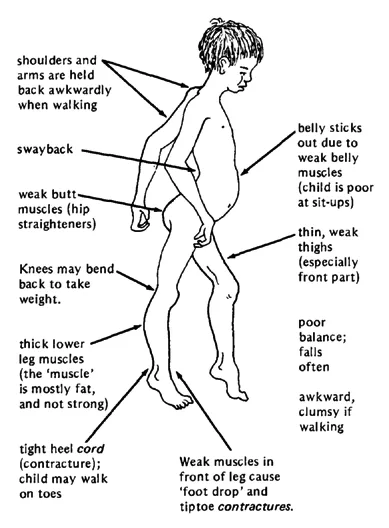
Duchenne Muscular Dystrophy
0 Comments
