- Published on
Pathology - Endometrial Carcinoma
Risk factors comprise unopposed estrogen use, obesity, diabetes, hypertension, nulliparity, and late menopause.
The highest occurrence is often observed between the ages of 55 and 65.
Endometrial carcinoma is the most prevalent gynecologic malignancy.
Usually occurs after endometrial hyperplasia.
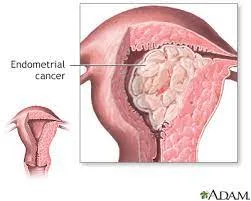
Gross: Either a localized polypoid tumor or a widespread tumor affecting the entire uterine surface.
Adenocarcinoma is identified by distinct gland patterns formed by malignant stratified columnar epithelial cells, with the possibility of observing some squamous cells.
Manifests as postmenopausal vaginal bleeding, facilitating early detection; can result in cervical blockage with accumulation of pus (pyometra) or blood (hematometra), leading to lower abdomen pain.
Therapy
Complete removal of the uterus, fallopian tubes, and ovaries; treatment with radiation therapy and chemotherapy for symptom relief.
Endometrial hyperplasia is the abnormal growth of endometrial glands due to an excess of estrogen, which can be caused by conditions such as polycystic ovarian syndrome, estrogen-secreting ovarian tumors, or estrogen replacement treatment. It presents clinically with postmenopausal vaginal bleeding and can result in endometrial cancer based on the level of atypia.
Risk factors comprise unopposed estrogen use, obesity, diabetes, hypertension, nulliparity, and late menopause.
The highest occurrence is often observed between the ages of 55 and 65.
Endometrial carcinoma is the most prevalent gynecologic malignancy.
Usually occurs after endometrial hyperplasia.
Gross: Either a localized polypoid tumor or a widespread tumor affecting the entire uterine surface.
Adenocarcinoma is identified by distinct gland patterns formed by malignant stratified columnar epithelial cells, with the possibility of observing some squamous cells.
Manifests as postmenopausal vaginal bleeding, facilitating early detection; can result in cervical blockage with accumulation of pus (pyometra) or blood (hematometra), leading to lower abdomen pain.
Therapy
Complete removal of the uterus, fallopian tubes, and ovaries; treatment with radiation therapy and chemotherapy for symptom relief.
Endometrial hyperplasia is the abnormal growth of endometrial glands due to an excess of estrogen, which can be caused by conditions such as polycystic ovarian syndrome, estrogen-secreting ovarian tumors, or estrogen replacement treatment. It presents clinically with postmenopausal vaginal bleeding and can result in endometrial cancer based on the level of atypia.
0 Comments
