- Published on
Pathology - Epidural Hematoma
Pathophysiology
Blunt head trauma can result in an epidural hematoma.
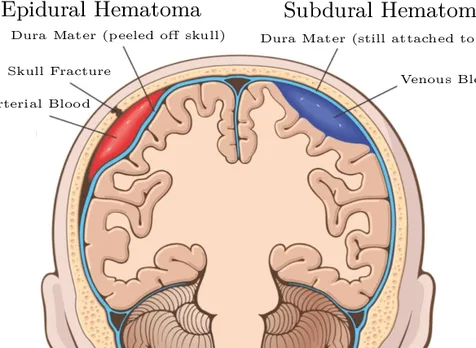
Ruptures of the middle meningeal artery arising from injuries to the temporoparietal area can cause epidural hematomas. This results in a biconvex lens-shaped collection of blood in the epidural space that does not cross suture lines. These individuals frequently experience lucid intervals, which are crucial for an early diagnosis. Some individuals may develop oculomotor palsy (cranial nerve III palsy) as a result of mass effect on the oculomotor nerve, which occurs when the hematoma compresses the brain in the direction of the midline. The mainstay of treatment is surgical blood extraction. Subdural hematomas are different from epidural hematomas in that they often develop more gradually, are caused by injury to the bridging veins, and have a crescent-shaped collection of blood because the suture lines have crossed.
Pathophysiology
Blunt head trauma can result in an epidural hematoma.
Ruptures of the middle meningeal artery arising from injuries to the temporoparietal area can cause epidural hematomas. This results in a biconvex lens-shaped collection of blood in the epidural space that does not cross suture lines. These individuals frequently experience lucid intervals, which are crucial for an early diagnosis. Some individuals may develop oculomotor palsy (cranial nerve III palsy) as a result of mass effect on the oculomotor nerve, which occurs when the hematoma compresses the brain in the direction of the midline. The mainstay of treatment is surgical blood extraction. Subdural hematomas are different from epidural hematomas in that they often develop more gradually, are caused by injury to the bridging veins, and have a crescent-shaped collection of blood because the suture lines have crossed.
0 Comments
