- Published on
Pathology - Pathology - Erythroblastosis Fetalis
Erythroblastosis Fetalis is a medical condition characterized by the presence of immature red blood cells in the fetus.
The occurrence of ABO incompatibility or Rh antigen incompatibility, typically involving the fetal D antigen, between the mother and fetus.
Pathology
Peripheral blood smear analysis reveals an increased presence of immature red blood cells known as erythroblasts, indicating reticuloctosis.
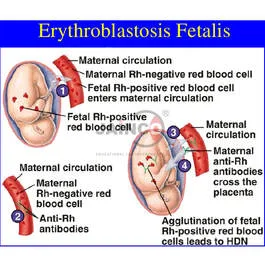
Pathophysiology: Maternal alloimmunization occurs when the mother's immune system becomes sensitized to fetal red blood cell antigens, typically due to exposure to fetal Rh antigens in a previous pregnancy. leads to the activation of maternal antibodies that target fetal red blood cells
Symptoms and signs
Severe fetal hemolytic anemia leads to the production of red blood cells outside the bone marrow, causing a rise in indirect bilirubin levels. This results in the development of jaundice and can lead to a condition called kernicterus. In severe instances, there may be fetal heart failure accompanied by widespread swelling, or the pregnancy may result in a stillbirth.
Therapeutic interventions
Administer blood transfusions when necessary.
Preventive approaches involve administering anti-DiGg to D-negative women during the delivery of a D-positive child.
Erythroblastosis Fetalis is a medical condition characterized by the presence of immature red blood cells in the fetus.
The occurrence of ABO incompatibility or Rh antigen incompatibility, typically involving the fetal D antigen, between the mother and fetus.
Pathology
Peripheral blood smear analysis reveals an increased presence of immature red blood cells known as erythroblasts, indicating reticuloctosis.
Pathophysiology: Maternal alloimmunization occurs when the mother's immune system becomes sensitized to fetal red blood cell antigens, typically due to exposure to fetal Rh antigens in a previous pregnancy. leads to the activation of maternal antibodies that target fetal red blood cells
Symptoms and signs
Severe fetal hemolytic anemia leads to the production of red blood cells outside the bone marrow, causing a rise in indirect bilirubin levels. This results in the development of jaundice and can lead to a condition called kernicterus. In severe instances, there may be fetal heart failure accompanied by widespread swelling, or the pregnancy may result in a stillbirth.
Therapeutic interventions
Administer blood transfusions when necessary.
Preventive approaches involve administering anti-DiGg to D-negative women during the delivery of a D-positive child.
0 Comments
