- Published on
Pathology - Essential Hypertension
Pathophysiology
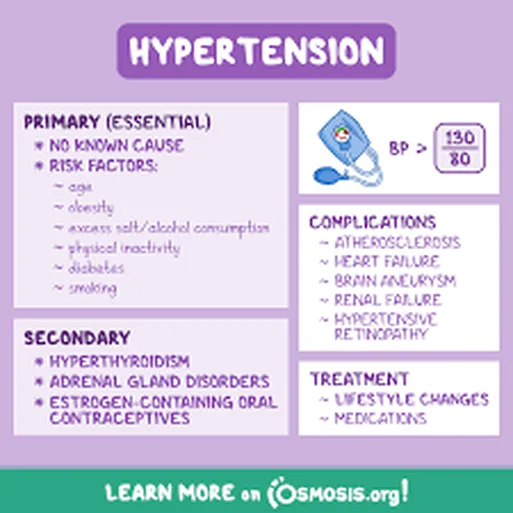
Two or more blood pressure readings with a systolic blood pressure of more than 140 mm Hg or a diastolic blood pressure of more than 90 mm Hg are considered hypertensive. A physical examination or laboratory test is unable to identify the cause of hypertension in the majority of cases (>90%); hence, the illness is most likely complex. In contrast to patients who have evidence of an organic disease producing BP irregularities, these patients are said to have primary, or essential, hypertension. Total peripheral resistance and cardiac output are the factors that determine peripheral blood pressure as determined by a blood pressure cuff; so, a rise in either of these variables can raise measured blood pressure.
Arteriolar tone is the primary determinant of total peripheral resistance. Endocrine diseases (hyperthyroidism, for example) and disorders like beriberi, pregnancy, and A-V abnormalities in the bone (Paget's disease of the bone) can all have an impact on cardiac output. When there are no apparent and widespread reasons for elevated blood pressure (as determined by laboratory tests and physical examination), hypertension is considered essential.
Pathophysiology
Two or more blood pressure readings with a systolic blood pressure of more than 140 mm Hg or a diastolic blood pressure of more than 90 mm Hg are considered hypertensive. A physical examination or laboratory test is unable to identify the cause of hypertension in the majority of cases (>90%); hence, the illness is most likely complex. In contrast to patients who have evidence of an organic disease producing BP irregularities, these patients are said to have primary, or essential, hypertension. Total peripheral resistance and cardiac output are the factors that determine peripheral blood pressure as determined by a blood pressure cuff; so, a rise in either of these variables can raise measured blood pressure.
Arteriolar tone is the primary determinant of total peripheral resistance. Endocrine diseases (hyperthyroidism, for example) and disorders like beriberi, pregnancy, and A-V abnormalities in the bone (Paget's disease of the bone) can all have an impact on cardiac output. When there are no apparent and widespread reasons for elevated blood pressure (as determined by laboratory tests and physical examination), hypertension is considered essential.
0 Comments
