- Published on
Pathology - Glioblastoma Multiforme
Linked to genetic alterations in many oncogenes and tumor suppressor genes, such as p53 and the RB gene.
Most prevalent primary brain tumor.
Most commonly found in individuals aged 40 to 60.
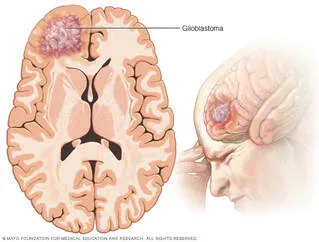
Pathology: Irregular, unconfined lesion located in the cerebral hemisphere.
Microscopic examination reveals a high-grade astrocytoma originating from astrocytes. Central regions show necrosis and bleeding surrounding by many tumor cells grouped in a pseudopalisading pattern, displaying a high level of anaplasia.
Symptoms and signs
Seizures, headaches, nausea, vomiting, and other symptoms indicating elevated intracranial pressure.
Imaging shows mass effect and cerebral edema caused by a tumor.
Treatments: Surgical excision along with chemotherapy and radiation therapy.
The prognosis is very grim, with the majority of patients succumbing within a year of being diagnosed.
Benign low-grade astrocytomas, particularly pilocytic astrocytomas, are slow-growing tumors seen in the cerebellum of children. Rosenthal fibers, which are eosinophilic corkscrew fibers, are observed on histological examination.
Linked to genetic alterations in many oncogenes and tumor suppressor genes, such as p53 and the RB gene.
Most prevalent primary brain tumor.
Most commonly found in individuals aged 40 to 60.
Pathology: Irregular, unconfined lesion located in the cerebral hemisphere.
Microscopic examination reveals a high-grade astrocytoma originating from astrocytes. Central regions show necrosis and bleeding surrounding by many tumor cells grouped in a pseudopalisading pattern, displaying a high level of anaplasia.
Symptoms and signs
Seizures, headaches, nausea, vomiting, and other symptoms indicating elevated intracranial pressure.
Imaging shows mass effect and cerebral edema caused by a tumor.
Treatments: Surgical excision along with chemotherapy and radiation therapy.
The prognosis is very grim, with the majority of patients succumbing within a year of being diagnosed.
Benign low-grade astrocytomas, particularly pilocytic astrocytomas, are slow-growing tumors seen in the cerebellum of children. Rosenthal fibers, which are eosinophilic corkscrew fibers, are observed on histological examination.
0 Comments
