- Published on
Pathology - Hairy Cell Leukemia
Primarily manifests in males of middle age.
Study of the nature and causes of diseases.
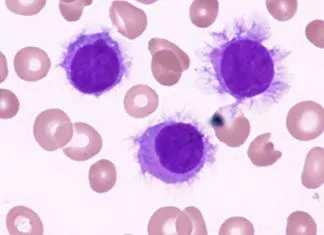
Bone marrow: Presence of hairy cells (B cells with hairlike projections) that exhibit positive staining for TRAP, resulting in interstitial infiltration.
Peripheral blood smear analysis: The presence of pancytopenia accompanied by hairy cells.
Presenting Symptoms
The patient presents with significant enlargement of the spleen (splenomegaly) and liver (hepatomegaly), accompanied with symptoms of exhaustion, easy bruising, bleeding, and increased susceptibility to infections.
Therapy
Highly responsive to chemotherapy and other substances, such as 2-chlorodeoxyadenosine. In extreme instances, it may be advisable to contemplate splenectomy.
Additional types of T-cell leukemias/lymphomas include the cutaneous T-cell lymphoid neoplasms (mycosis fungoides and Sézary syndrome), which are distinguished by the presence of abnormal CD4 T cells with cerebriform nuclei, and adult T-cell leukemia/lymphoma, which is linked to HTLV-1 infection.
Primarily manifests in males of middle age.
Study of the nature and causes of diseases.
Bone marrow: Presence of hairy cells (B cells with hairlike projections) that exhibit positive staining for TRAP, resulting in interstitial infiltration.
Peripheral blood smear analysis: The presence of pancytopenia accompanied by hairy cells.
Presenting Symptoms
The patient presents with significant enlargement of the spleen (splenomegaly) and liver (hepatomegaly), accompanied with symptoms of exhaustion, easy bruising, bleeding, and increased susceptibility to infections.
Therapy
Highly responsive to chemotherapy and other substances, such as 2-chlorodeoxyadenosine. In extreme instances, it may be advisable to contemplate splenectomy.
Additional types of T-cell leukemias/lymphomas include the cutaneous T-cell lymphoid neoplasms (mycosis fungoides and Sézary syndrome), which are distinguished by the presence of abnormal CD4 T cells with cerebriform nuclei, and adult T-cell leukemia/lymphoma, which is linked to HTLV-1 infection.
0 Comments
