- Published on
Pathology - Hereditary Spherocytosis
Etiology
An autosomal dominant disorder characterized by a deficiency in a protein found in the membrane of red blood cells, typically spectrin or ankyrin.
Pathology
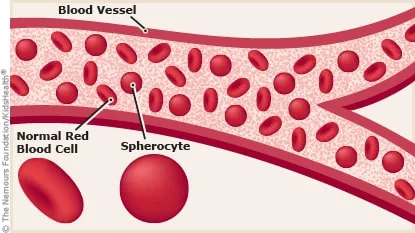
Peripheral blood smear: Spherocytes (erythrocytes that are spherical in shape and lack a central pale area) |
Symptoms and signs
The patient has splenomegaly, along with hemolytic anemia that may result in jaundice.
Laboratory results indicate elevated erythrocyte osmotic fragility, increased mean corpuscular hemoglobin concentration (MCHC), presence of reticulocytes, and normal values for other parameters.
Mean corpuscular volume (MCV) and hemoglobin (Hgb) levels are within the normal range.
Therapy
Administration of folate supplements following splenectomy.
Paroxysmal nocturnal hemoglobinuria is a condition involving stem cells that is marked by heightened sensitivity. Red blood cells are susceptible to lysis caused by complement activation. Patients have recurring morning hemoglobinuria.
The individual exhibits elevated levels of hemosiderin in their urine, along with hemolytic anemia and venous thrombosis. The diagnosis has been verified. Confirmed with a positive Ham (acid serum) test and flow cytometry analysis.
Etiology
An autosomal dominant disorder characterized by a deficiency in a protein found in the membrane of red blood cells, typically spectrin or ankyrin.
Pathology
Peripheral blood smear: Spherocytes (erythrocytes that are spherical in shape and lack a central pale area) |
Symptoms and signs
The patient has splenomegaly, along with hemolytic anemia that may result in jaundice.
Laboratory results indicate elevated erythrocyte osmotic fragility, increased mean corpuscular hemoglobin concentration (MCHC), presence of reticulocytes, and normal values for other parameters.
Mean corpuscular volume (MCV) and hemoglobin (Hgb) levels are within the normal range.
Therapy
Administration of folate supplements following splenectomy.
Paroxysmal nocturnal hemoglobinuria is a condition involving stem cells that is marked by heightened sensitivity. Red blood cells are susceptible to lysis caused by complement activation. Patients have recurring morning hemoglobinuria.
The individual exhibits elevated levels of hemosiderin in their urine, along with hemolytic anemia and venous thrombosis. The diagnosis has been verified. Confirmed with a positive Ham (acid serum) test and flow cytometry analysis.
0 Comments
