- Published on
Pathology - Hyperprolactinemia
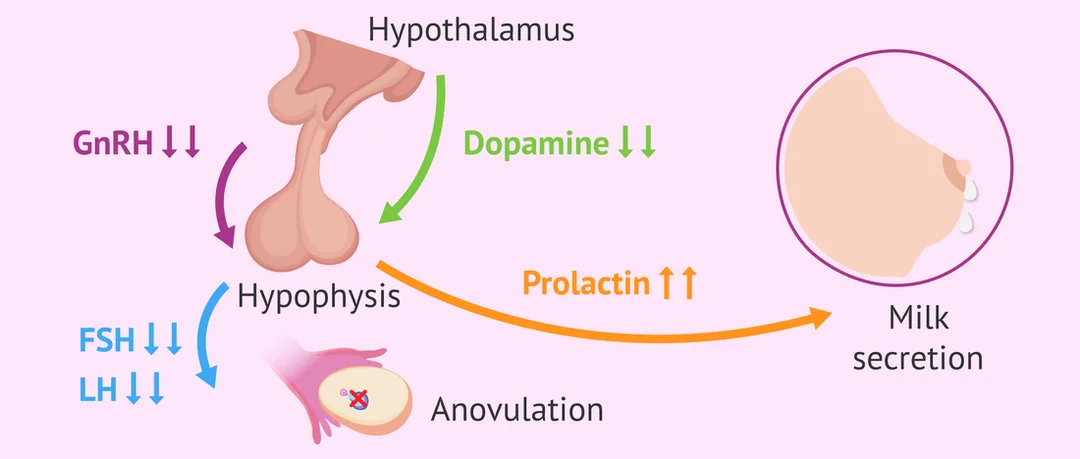
Overabundance of prolactin suppresses the release of gonadotropin-releasing hormone (GnRH) from the hypothalamus, which lowers the release of LH and FSH. Due to this, the patient's ovarian and menstrual cycles have been severely disrupted, leading to anovulation and secondary amenorrhea. Male libido reduction, erectile dysfunction, and hypogonadotropic hypogonadism are all brought on by hyperprolactinemia. Hyperprolactinemia can have a variety of reasons, such as physiological ones like pregnancy, pathologic ones like prolactinoma, and pharmacologic side effects like antipsychotic treatment. Hypothalamic dopamine is the primary regulator of anterior pituitary secretory inhibition of prolactin production. Larger secretory tumors are surgically removed, while hyperprolactinemia is treated with oral synthetic dopamine agonists (e.g., cabergoline, bromocriptine).
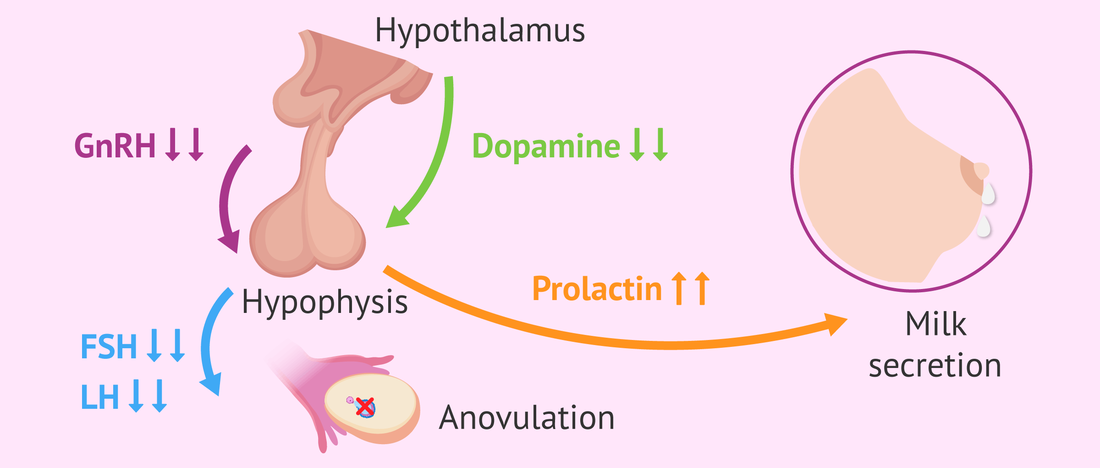
Overabundance of prolactin suppresses the release of gonadotropin-releasing hormone (GnRH) from the hypothalamus, which lowers the release of LH and FSH. Due to this, the patient's ovarian and menstrual cycles have been severely disrupted, leading to anovulation and secondary amenorrhea. Male libido reduction, erectile dysfunction, and hypogonadotropic hypogonadism are all brought on by hyperprolactinemia. Hyperprolactinemia can have a variety of reasons, such as physiological ones like pregnancy, pathologic ones like prolactinoma, and pharmacologic side effects like antipsychotic treatment. Hypothalamic dopamine is the primary regulator of anterior pituitary secretory inhibition of prolactin production. Larger secretory tumors are surgically removed, while hyperprolactinemia is treated with oral synthetic dopamine agonists (e.g., cabergoline, bromocriptine).
0 Comments
