- Published on
Pathology - Hypertensive Nephrosclerosis
Linked to chronic, uncontrolled hypertension for more than 15 years.
African Americans and individuals over the age of 45 have an increased likelihood of getting hypertensive nephrosclerosis.
Pathology
Gross: Kidneys that are reduced in size and have visible scars.
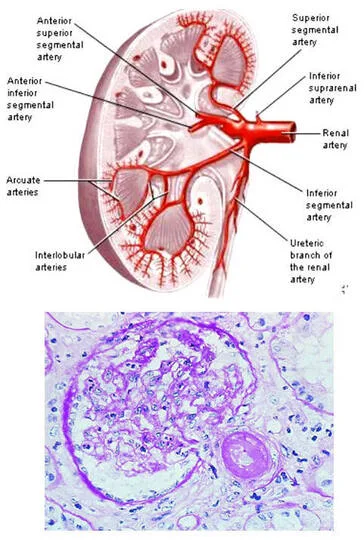
Light microscopy shows mesangial cell growth, decreased glomerular tuft, sclerosis and hyalinization of afferent arterioles, interstitial fibrosis, and eventual development of secondary focal segmental glomerulosclerosis.
Symptoms and signs
Nephrotic syndrome typically includes fluctuating levels of protein in the urine, along with hypertension, hypertensive retinopathy, and left ventricular hypertrophy.
Treating hypertension aggressively with ACE inhibitors; considering dialysis and/or transplant for individuals with end-stage renal disease.
Hypertensive nephrosclerosis is the primary cause of end-stage renal disease (ESRD) in African Americans.
Linked to chronic, uncontrolled hypertension for more than 15 years.
African Americans and individuals over the age of 45 have an increased likelihood of getting hypertensive nephrosclerosis.
Pathology
Gross: Kidneys that are reduced in size and have visible scars.
Light microscopy shows mesangial cell growth, decreased glomerular tuft, sclerosis and hyalinization of afferent arterioles, interstitial fibrosis, and eventual development of secondary focal segmental glomerulosclerosis.
Symptoms and signs
Nephrotic syndrome typically includes fluctuating levels of protein in the urine, along with hypertension, hypertensive retinopathy, and left ventricular hypertrophy.
Treating hypertension aggressively with ACE inhibitors; considering dialysis and/or transplant for individuals with end-stage renal disease.
Hypertensive nephrosclerosis is the primary cause of end-stage renal disease (ESRD) in African Americans.
0 Comments
