- Published on
Pathology - Idiopathic Pulmonary Fibrosis
Pathophysiology
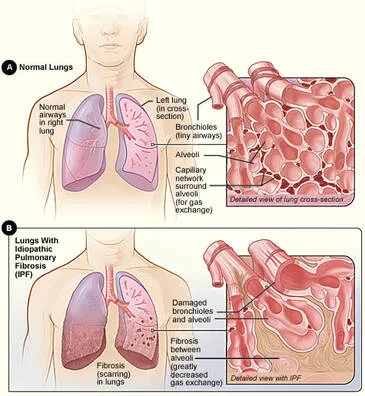
Chronic inflammation of the alveolar walls causes diffuse, progressive fibrosis and the breakdown of the normal architecture of the lung in idiopathic pulmonary fibrosis. This process gradually deteriorates terminal respiratory units' ability to perform normal gas exchange and pulmonary perfusion. There is an increased elastic work of breathing with extra inspiratory effort as a result of this restrictive lung illness. The frequent presentation symptoms include dry cough, dyspnea, and clubbing of the fingers and toes. The sequential opening of collapsing respiratory units is reflected in the respiratory crackles. Breathing at low lung volumes, loss of pulmonary surfactant, and deformed architecture all contribute to this collapse. Tests for pulmonary function often reveal a decline in all lung volumes; on expiration, greater lung recoil forces retain the FEV1:FVC ratio. As lung fibrosis advances and there is a ventilation-perfusion mismatch when breathing at reduced lung capacities, gas exchange becomes inefficient.
Pathophysiology
Chronic inflammation of the alveolar walls causes diffuse, progressive fibrosis and the breakdown of the normal architecture of the lung in idiopathic pulmonary fibrosis. This process gradually deteriorates terminal respiratory units' ability to perform normal gas exchange and pulmonary perfusion. There is an increased elastic work of breathing with extra inspiratory effort as a result of this restrictive lung illness. The frequent presentation symptoms include dry cough, dyspnea, and clubbing of the fingers and toes. The sequential opening of collapsing respiratory units is reflected in the respiratory crackles. Breathing at low lung volumes, loss of pulmonary surfactant, and deformed architecture all contribute to this collapse. Tests for pulmonary function often reveal a decline in all lung volumes; on expiration, greater lung recoil forces retain the FEV1:FVC ratio. As lung fibrosis advances and there is a ventilation-perfusion mismatch when breathing at reduced lung capacities, gas exchange becomes inefficient.
0 Comments
