- Published on
Pathology - Job Syndrome
caused by a mutation on chromosome 7q21 in the STAT3 gene.
The pathophysiological understanding A family of transcription factors known as STAT3 proteins is involved in signaling and the synthesis of cytokines. Decreased IL-6 and IL-23 signaling impairs the ability of a subset of helper T cells (Th 17) to differentiate. These cells are essential for the production of cytokines (IL-17 and IL-22) that are required to destroy bacteria and fungus. Decreased production of IL-10 and IL-4, which control the release of pro-inflammatory cytokines, raises interferon-gamma or tumor necrosis factor levels, which can then raise IgE levels.
Pathology
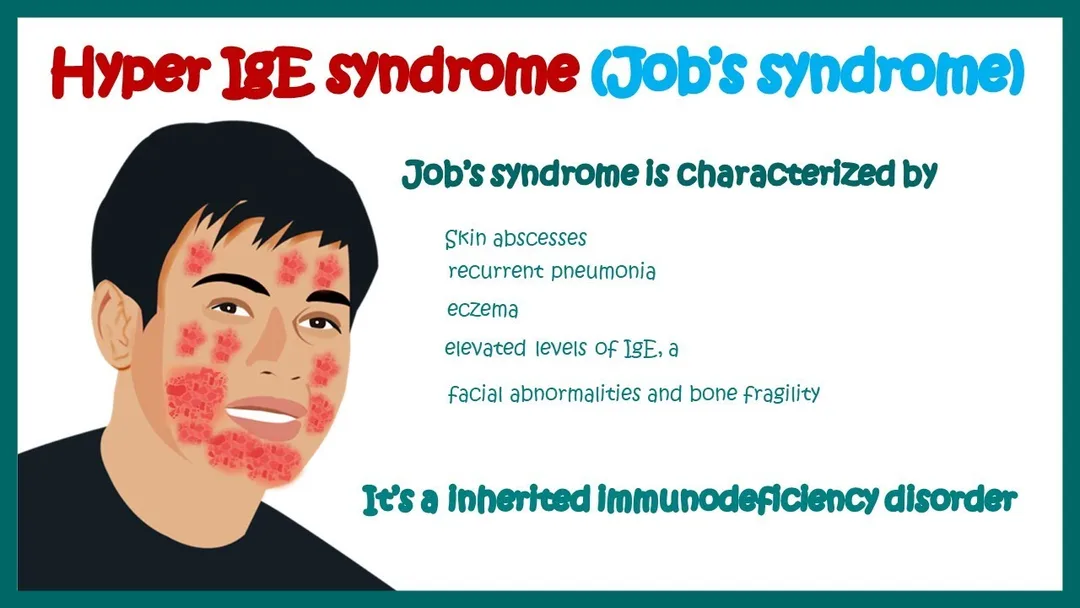
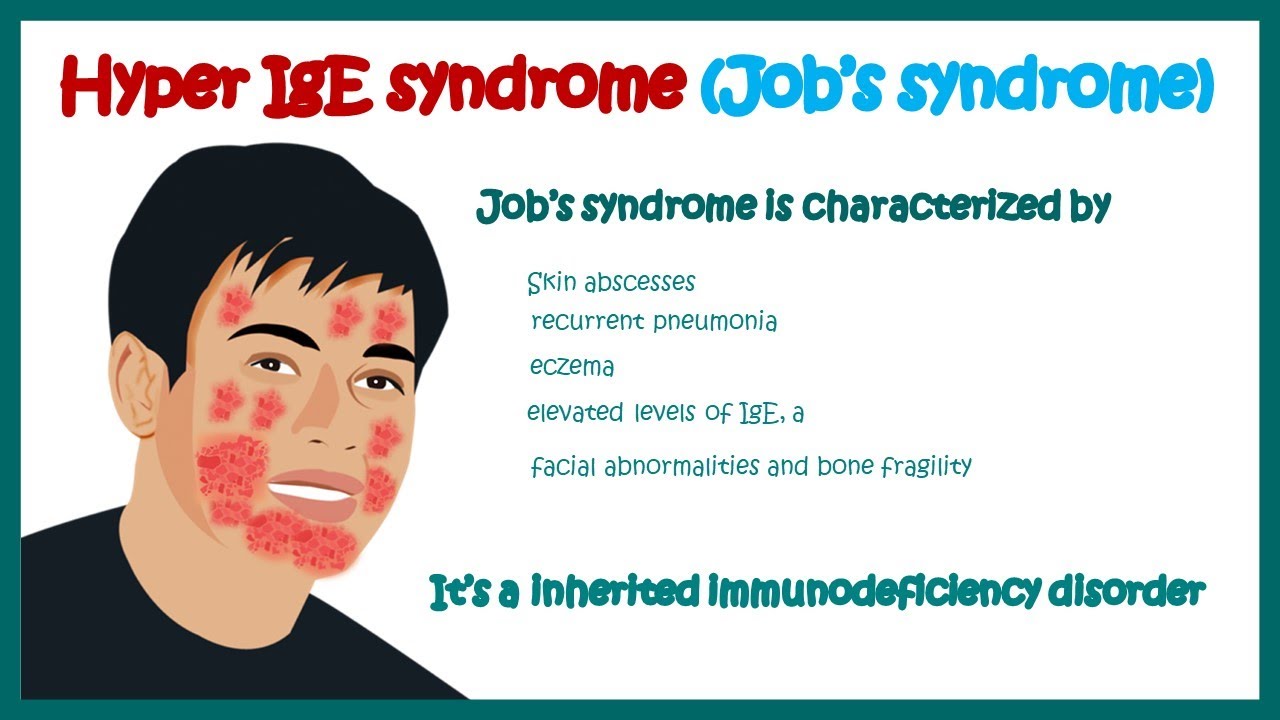
presents with eczema, recurrent infections (such as pneumonia, sinusitis, and otitis), and non-inflamed, cold staphylococcal abscesses; patients may also have skeletal anomalies, such as coarse facial features, scoliosis, and retained primary teeth.
results from the lab: increased levels of lgE and eosinophilia.
Treatment: Antibiotics for both infection prevention and treatment.
Remarks A malfunction in the CD40 ligand on CD4 T helper cells causes the inability to class switch from lgM to other classes, which is the cause of hyper-IgM syndrome. Early in life, it exhibits severe pyogenic infections.
caused by a mutation on chromosome 7q21 in the STAT3 gene.
The pathophysiological understanding A family of transcription factors known as STAT3 proteins is involved in signaling and the synthesis of cytokines. Decreased IL-6 and IL-23 signaling impairs the ability of a subset of helper T cells (Th 17) to differentiate. These cells are essential for the production of cytokines (IL-17 and IL-22) that are required to destroy bacteria and fungus. Decreased production of IL-10 and IL-4, which control the release of pro-inflammatory cytokines, raises interferon-gamma or tumor necrosis factor levels, which can then raise IgE levels.
Pathology
presents with eczema, recurrent infections (such as pneumonia, sinusitis, and otitis), and non-inflamed, cold staphylococcal abscesses; patients may also have skeletal anomalies, such as coarse facial features, scoliosis, and retained primary teeth.
results from the lab: increased levels of lgE and eosinophilia.
Treatment: Antibiotics for both infection prevention and treatment.
Remarks A malfunction in the CD40 ligand on CD4 T helper cells causes the inability to class switch from lgM to other classes, which is the cause of hyper-IgM syndrome. Early in life, it exhibits severe pyogenic infections.
0 Comments
