- Published on
Pathology - Lacunar Infarcts
Pathophysiology
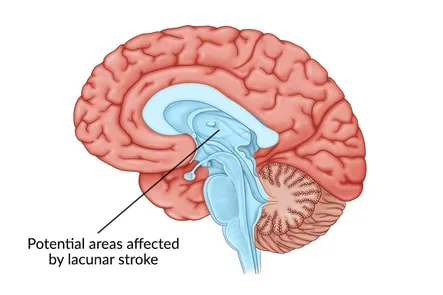
Hypertension is a significant risk factor for this illness, which can arise from obstruction of the perforating arteries that supply the interior structures of the brain. This disease's pathogenesis is caused by lipohyalinosis or microthrombi. Larger proximal arteries with atherosclerotic plaques are the source of microthrombi. The narrowing of tiny veins in lipohyalinosis is caused by either fibrinoid necrosis or inflammation and edema. Pure motor strokes are the most prevalent type of lacunar infarct syndrome, while there are five other types as well. The internal capsule, which contains fibers from the corticospinal tract that aid in voluntary movement, is involved in the paresis. Dysarthria may develop as a result of basal ganglia involvement. Similar to other forms of stroke, it's critical to keep in mind that maintaining cerebral perfusion is necessary to stop more ischemia in spite of the patient's elevated blood pressure.
Pathophysiology
Hypertension is a significant risk factor for this illness, which can arise from obstruction of the perforating arteries that supply the interior structures of the brain. This disease's pathogenesis is caused by lipohyalinosis or microthrombi. Larger proximal arteries with atherosclerotic plaques are the source of microthrombi. The narrowing of tiny veins in lipohyalinosis is caused by either fibrinoid necrosis or inflammation and edema. Pure motor strokes are the most prevalent type of lacunar infarct syndrome, while there are five other types as well. The internal capsule, which contains fibers from the corticospinal tract that aid in voluntary movement, is involved in the paresis. Dysarthria may develop as a result of basal ganglia involvement. Similar to other forms of stroke, it's critical to keep in mind that maintaining cerebral perfusion is necessary to stop more ischemia in spite of the patient's elevated blood pressure.
0 Comments
