- Published on
Pathology - Metabolic Acidosis
Pathophysiology
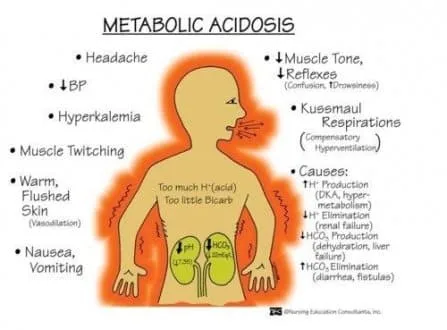
The most likely cause of type 1 diabetes mellitus is a shortage of insulin. Severe hyperglycemia and ketoacidosis are caused by the inability of insulin-dependent organs to absorb and metabolize glucose and by the persistent synthesis of glucose and ketone by the liver. The osmotic diuresis that ensues from this leads to hypovolemia, which explains the hypotension, tachycardia, and hemoconcentration that have been noted. A metabolic acidosis (HCO3 - <22) is caused by excess ketoacids because the excess acid is buffered by serum bicarbonate ions. The observed tachypnea is caused by peripheral chemoreceptors being stimulated by low arterial blood pH. A secondary respiratory alkalosis (Paco2 <33) is caused by this hyperventilation, and it helps to partially offset the initial metabolic acidosis. The cause of hyponatremia is the replacement of serum sodium with glucose, an alternative osmolyte.
Due to potassium shifting out of cells as a result of low insulin and cellular buffering of H+ ions in exchange for K+ ions, hyperkalemia is the result. Here, urinary potassium losses are causing wholebody potassium depletion, which is being concealed by hyperkalemia. Intravenous saline/insulin infusion is the first line of treatment, and serum electrolytes, acid-base balance, hyperglycemia, and hemodynamics are all closely monitored.
Pathophysiology
The most likely cause of type 1 diabetes mellitus is a shortage of insulin. Severe hyperglycemia and ketoacidosis are caused by the inability of insulin-dependent organs to absorb and metabolize glucose and by the persistent synthesis of glucose and ketone by the liver. The osmotic diuresis that ensues from this leads to hypovolemia, which explains the hypotension, tachycardia, and hemoconcentration that have been noted. A metabolic acidosis (HCO3 - <22) is caused by excess ketoacids because the excess acid is buffered by serum bicarbonate ions. The observed tachypnea is caused by peripheral chemoreceptors being stimulated by low arterial blood pH. A secondary respiratory alkalosis (Paco2 <33) is caused by this hyperventilation, and it helps to partially offset the initial metabolic acidosis. The cause of hyponatremia is the replacement of serum sodium with glucose, an alternative osmolyte.
Due to potassium shifting out of cells as a result of low insulin and cellular buffering of H+ ions in exchange for K+ ions, hyperkalemia is the result. Here, urinary potassium losses are causing wholebody potassium depletion, which is being concealed by hyperkalemia. Intravenous saline/insulin infusion is the first line of treatment, and serum electrolytes, acid-base balance, hyperglycemia, and hemodynamics are all closely monitored.
0 Comments
