- Published on
Pathology - Multiple Sclerosis
The cause is unidentified, but autoimmune, genetic, and environmental factors are suspected.
Incidence rises with distance from the equator and is more prevalent in individuals with HLA-DR2.
Typically occurs in Caucasian women aged 20 to 30.
Study of diseases
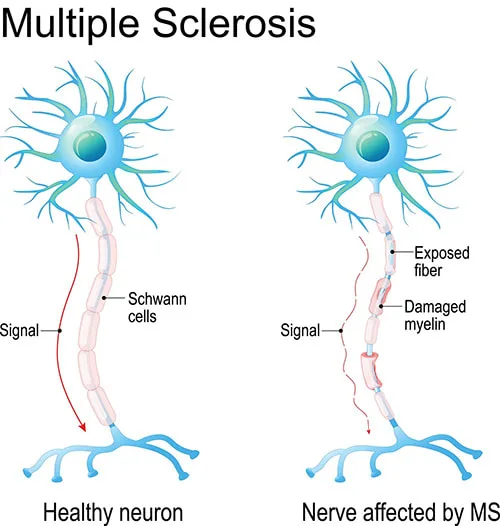
CNS: Numerous solid plaques indicating demyelination in the white matter of the CNS, particularly in the optic nerve, brainstem, and periventricular regions.
Microscopic examination reveals a reduction in oligodendrocytes, presence of monocytes, lymphocytes, and lipid-laden macrophages around blood vessels, as well as gliosis and increased astrocyte growth.
Symptoms and signs
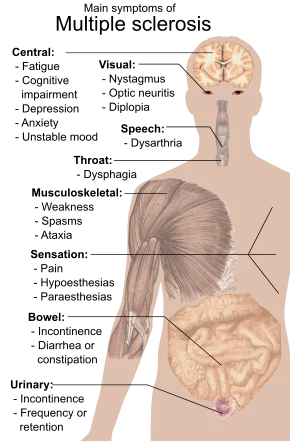
The disease follows a pattern of relapse and remission, with remissions becoming incomplete over time. Symptoms include the classic Charcot triad of nystagmus, scanning speech, and intention tremor, as well as motor and sensory impairments affecting the trunk and extremities (hemiparesis, ataxia), visual impairment (optic neuritis, retrobulbar neuritis, internuclear ophthalmoplegia), and urinary/bowel incontinence due to sphincter control loss.
Lab results: Lumbar puncture indicates a slight increase in lymphocytes and high lgG levels, demonstrated by the presence of numerous oligoclonal bands on electrophoresis.
Treatment includes corticosteroids and other immunomodulator drugs such as ~-interferon and natalizumab.
The cause is unidentified, but autoimmune, genetic, and environmental factors are suspected.
Incidence rises with distance from the equator and is more prevalent in individuals with HLA-DR2.
Typically occurs in Caucasian women aged 20 to 30.
Study of diseases
CNS: Numerous solid plaques indicating demyelination in the white matter of the CNS, particularly in the optic nerve, brainstem, and periventricular regions.
Microscopic examination reveals a reduction in oligodendrocytes, presence of monocytes, lymphocytes, and lipid-laden macrophages around blood vessels, as well as gliosis and increased astrocyte growth.
Symptoms and signs
The disease follows a pattern of relapse and remission, with remissions becoming incomplete over time. Symptoms include the classic Charcot triad of nystagmus, scanning speech, and intention tremor, as well as motor and sensory impairments affecting the trunk and extremities (hemiparesis, ataxia), visual impairment (optic neuritis, retrobulbar neuritis, internuclear ophthalmoplegia), and urinary/bowel incontinence due to sphincter control loss.
Lab results: Lumbar puncture indicates a slight increase in lymphocytes and high lgG levels, demonstrated by the presence of numerous oligoclonal bands on electrophoresis.
Treatment includes corticosteroids and other immunomodulator drugs such as ~-interferon and natalizumab.
0 Comments
