- Published on
Pathology - Myelofibrosis with Myeloid Metaplasia
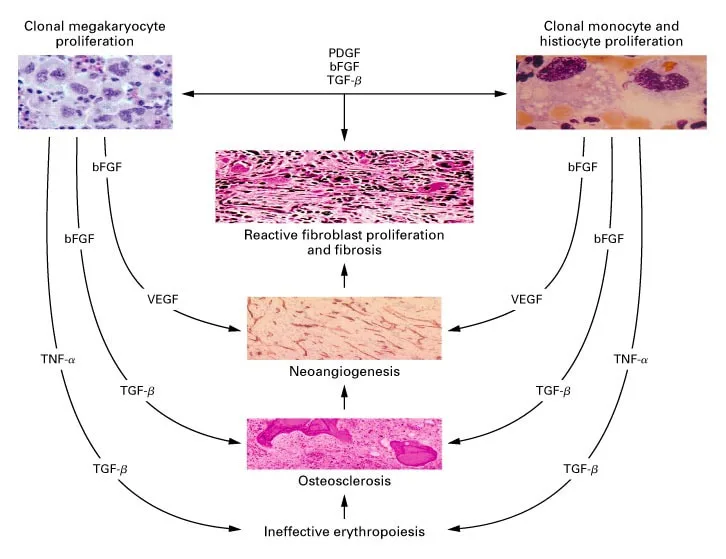
Fibroblastic proliferation in the bone occurs as a consequence of elevated secretion of PDGF and TGF-B.
Study of the nature and causes of diseases.
Bone marrow: The bone marrow cavity is replaced by fibrous tissue, resulting in the loss of hematopoietic progenitor cells, save for an increase in megakaryocytes.
The liver and spleen undergo extramedullary hematopoiesis due to bone marrow depletion.
Peripheral blood smear reveals erythrocytes with a teardrop form, granulocyte precursor cells, nucleated red blood cells, and thrombocytosis with morphologically aberrant platelets.
Signs and symptoms
The patient exhibits weariness and pallor, which are common symptoms of anemia. Additionally, the patient has a significantly enlarged spleen, known as massive splenomegaly. Laboratory tests reveal a decreased hematocrit (Hct) level.
Therapy
Treatment options for bone marrow transplant include supportive care with transfusions, as well as the use of steroids or chemotherapeutic drugs.
Myelofibrosis is classified as a myeloproliferative condition, along with chronic myeloid leukemia (CML), essential thrombocythemia, and polycythemia vera.
Fibroblastic proliferation in the bone occurs as a consequence of elevated secretion of PDGF and TGF-B.
Study of the nature and causes of diseases.
Bone marrow: The bone marrow cavity is replaced by fibrous tissue, resulting in the loss of hematopoietic progenitor cells, save for an increase in megakaryocytes.
The liver and spleen undergo extramedullary hematopoiesis due to bone marrow depletion.
Peripheral blood smear reveals erythrocytes with a teardrop form, granulocyte precursor cells, nucleated red blood cells, and thrombocytosis with morphologically aberrant platelets.
Signs and symptoms
The patient exhibits weariness and pallor, which are common symptoms of anemia. Additionally, the patient has a significantly enlarged spleen, known as massive splenomegaly. Laboratory tests reveal a decreased hematocrit (Hct) level.
Therapy
Treatment options for bone marrow transplant include supportive care with transfusions, as well as the use of steroids or chemotherapeutic drugs.
Myelofibrosis is classified as a myeloproliferative condition, along with chronic myeloid leukemia (CML), essential thrombocythemia, and polycythemia vera.
0 Comments
