- Published on
Pathology - Myocardial infarction with ST segment elevation (STEMI)
Pathophysiology
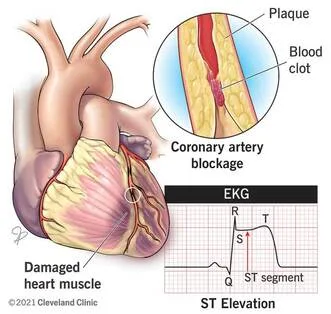
This is an instance of ST elevation myocardial infarction, or acute coronary syndrome (ACS). Stable angina and ST and non-ST segment elevation myocardial infarctions (STEMI and NSTEMI, respectively) are included in this category of illnesses. A classic presentation is pain, heaviness, or pressure in the substernal chest that may radiate to the patient's left arm or left jaw. Although the illness usually progresses over time and may eventually lead to symptoms at rest, the discomfort is most frequently triggered by effort and eased by rest. Both pain and sympathetic nervous system (SNS) activation have raised this patient's blood pressure and pulse. Relatively low blood pressure in this context would be concerning as it would probably imply substantial ischemic left ventricular (LV) damage. Another sign of the SNS's reaction to pain and injury is diaphoresis.
The S3 sound is a sign of decreased ventricular compliance, most likely as a result of myocardial ischemia-induced transient alterations. This patient has a clean lung field, a normal JVP, and no signs of heart failure because the event is acute and not yet decompensating. Normal perfusion in the extremities suggests sufficient ventricular function, but the anteroseptal distribution of the ECG (V1–V4) is crucial for myocardial damage. To restore heart circulation as soon as possible, this patient requires intravascular stent implantation or fibrinolysis in addition to oxygen, nitrate, aspirin, and morphine therapy.
Pathophysiology
This is an instance of ST elevation myocardial infarction, or acute coronary syndrome (ACS). Stable angina and ST and non-ST segment elevation myocardial infarctions (STEMI and NSTEMI, respectively) are included in this category of illnesses. A classic presentation is pain, heaviness, or pressure in the substernal chest that may radiate to the patient's left arm or left jaw. Although the illness usually progresses over time and may eventually lead to symptoms at rest, the discomfort is most frequently triggered by effort and eased by rest. Both pain and sympathetic nervous system (SNS) activation have raised this patient's blood pressure and pulse. Relatively low blood pressure in this context would be concerning as it would probably imply substantial ischemic left ventricular (LV) damage. Another sign of the SNS's reaction to pain and injury is diaphoresis.
The S3 sound is a sign of decreased ventricular compliance, most likely as a result of myocardial ischemia-induced transient alterations. This patient has a clean lung field, a normal JVP, and no signs of heart failure because the event is acute and not yet decompensating. Normal perfusion in the extremities suggests sufficient ventricular function, but the anteroseptal distribution of the ECG (V1–V4) is crucial for myocardial damage. To restore heart circulation as soon as possible, this patient requires intravascular stent implantation or fibrinolysis in addition to oxygen, nitrate, aspirin, and morphine therapy.
0 Comments
