- Published on
Pathology - Neoplasms of the Vagina (Clear Cell Carcinoma, Squamous Cell Carcinoma)
Clear cell adenocarcinoma (CCA) is a rare kind of cancer that typically affects daughters of mothers who were treated with DES during pregnancy. It is commonly detected in individuals between the ages of 15 and 20.
Squamous cell carcinoma (SCC) is an uncommon kind of cancer that is linked to HPV infection.
Pathology
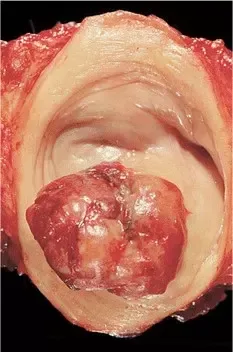
CCA: Gross: red granular lesion seen on the upper anterior vagina. The cells are vacuolated and contain glycogen. They are preceded by vaginal adenosis, which is characterized by columnar epithelial-lined glands in locations that are typically lined by stratified squamous epithelium.
SCC: Gross finding of an invasive plaque-like mass located in the upper posterior vagina. The process starts with epithelial thickening linked to dysplastic alterations at a microscopic level, which then progresses to invasive squamous cell carcinoma with keratinization.
Clinical Symptoms
CCA may be asymptomatic and have a gradual onset characterized by vaginal hemorrhage.
SCC may be asymptomatic; can present with irregular spotting, vaginal discharge, vulvar discomfort, and pruritus.
Utilizing surgery and irradiation, together with vigilant monitoring and screening for high-risk individuals.
Sarcoma botryoides is a rare type of polypoidal embryonal rhabdomyosarcoma, and it is the most prevalent sarcoma found in infants under the age of 5. The condition appears as a tumor that looks like a cluster of grapes extending into the vagina and necessitates surgical removal and chemotherapy.
Clear cell adenocarcinoma (CCA) is a rare kind of cancer that typically affects daughters of mothers who were treated with DES during pregnancy. It is commonly detected in individuals between the ages of 15 and 20.
Squamous cell carcinoma (SCC) is an uncommon kind of cancer that is linked to HPV infection.
Pathology
CCA: Gross: red granular lesion seen on the upper anterior vagina. The cells are vacuolated and contain glycogen. They are preceded by vaginal adenosis, which is characterized by columnar epithelial-lined glands in locations that are typically lined by stratified squamous epithelium.
SCC: Gross finding of an invasive plaque-like mass located in the upper posterior vagina. The process starts with epithelial thickening linked to dysplastic alterations at a microscopic level, which then progresses to invasive squamous cell carcinoma with keratinization.
Clinical Symptoms
CCA may be asymptomatic and have a gradual onset characterized by vaginal hemorrhage.
SCC may be asymptomatic; can present with irregular spotting, vaginal discharge, vulvar discomfort, and pruritus.
Utilizing surgery and irradiation, together with vigilant monitoring and screening for high-risk individuals.
Sarcoma botryoides is a rare type of polypoidal embryonal rhabdomyosarcoma, and it is the most prevalent sarcoma found in infants under the age of 5. The condition appears as a tumor that looks like a cluster of grapes extending into the vagina and necessitates surgical removal and chemotherapy.
0 Comments
