- Published on
Pathology - Normal Pressure Hydrocephalus
Pathogenesis
Normal pressure hydrocephalus (NPH) is characterized by the typical trifecta of symptoms: urine incontinence, dementia, and gait abnormalities.
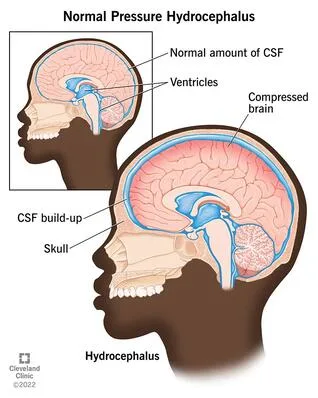
The three Ws stand for wet (urinary incontinence), wacky (dementia), and wobbly (gait disturbance), and are a useful acronym for remembering the trio. Cerebrospinal fluid (CSF) builds up as a result of reduced resorption at the arachnoid villi, causing non-pulmonary hydrolysis (NPH). CSF pressures are elevated but still fall within the normal range. The corticospinal tract fibers that pass through the internal capsule often stretch first, causing gait difficulty. Later in the course of the disease, disinhibition of bladder contractility leads to urinary incontinence. To determine whether the patient's symptoms have improved once the volume of CSF that is circulating is decreased, lumbar punctures can be done. Patients eventually require a ventriculoperitoneal shunt in order to stop the accumulation of CSF.
Pathogenesis
Normal pressure hydrocephalus (NPH) is characterized by the typical trifecta of symptoms: urine incontinence, dementia, and gait abnormalities.
The three Ws stand for wet (urinary incontinence), wacky (dementia), and wobbly (gait disturbance), and are a useful acronym for remembering the trio. Cerebrospinal fluid (CSF) builds up as a result of reduced resorption at the arachnoid villi, causing non-pulmonary hydrolysis (NPH). CSF pressures are elevated but still fall within the normal range. The corticospinal tract fibers that pass through the internal capsule often stretch first, causing gait difficulty. Later in the course of the disease, disinhibition of bladder contractility leads to urinary incontinence. To determine whether the patient's symptoms have improved once the volume of CSF that is circulating is decreased, lumbar punctures can be done. Patients eventually require a ventriculoperitoneal shunt in order to stop the accumulation of CSF.
0 Comments
